
Last updated September 22, 2026
Free on-site gate assessment - hinges, posts, and your LiftMaster or Nice gate operator checked before anything is quoted
The assessment is free and the quote is the invoice.

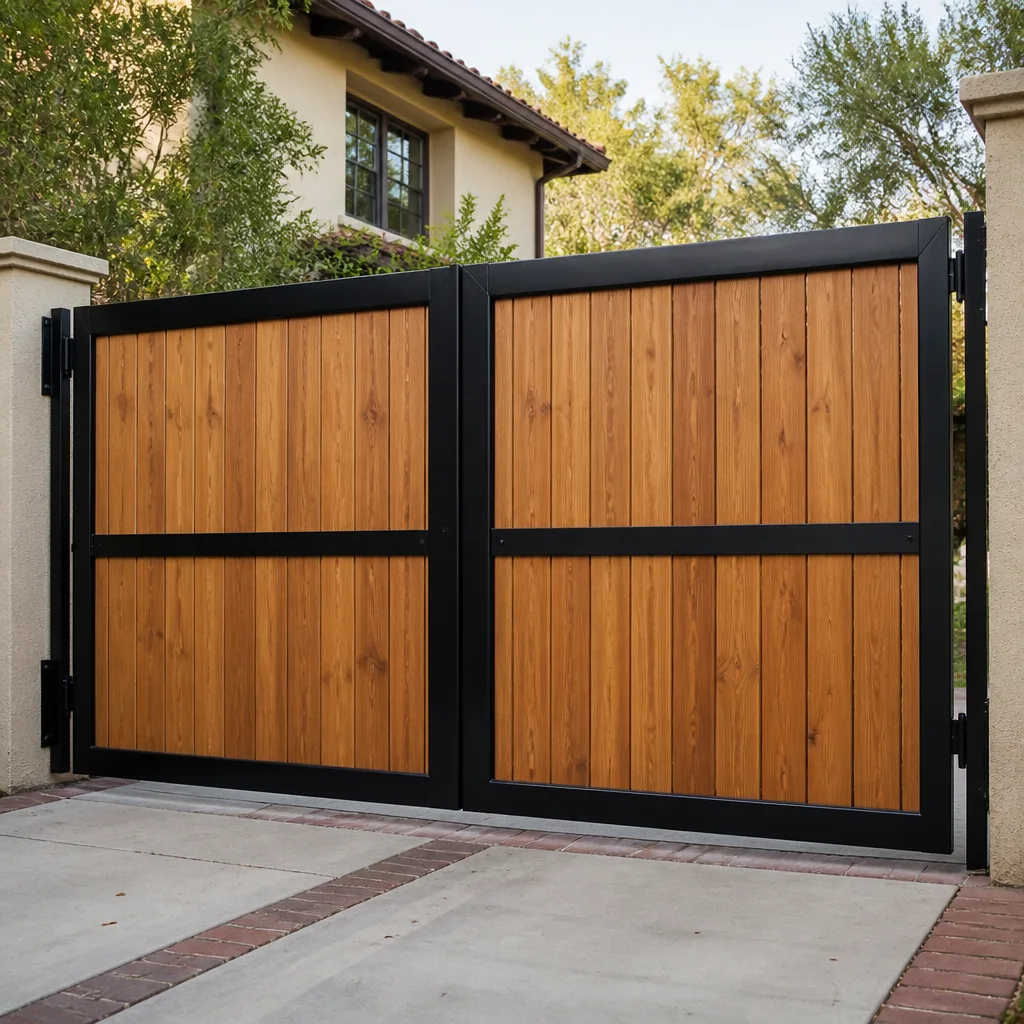

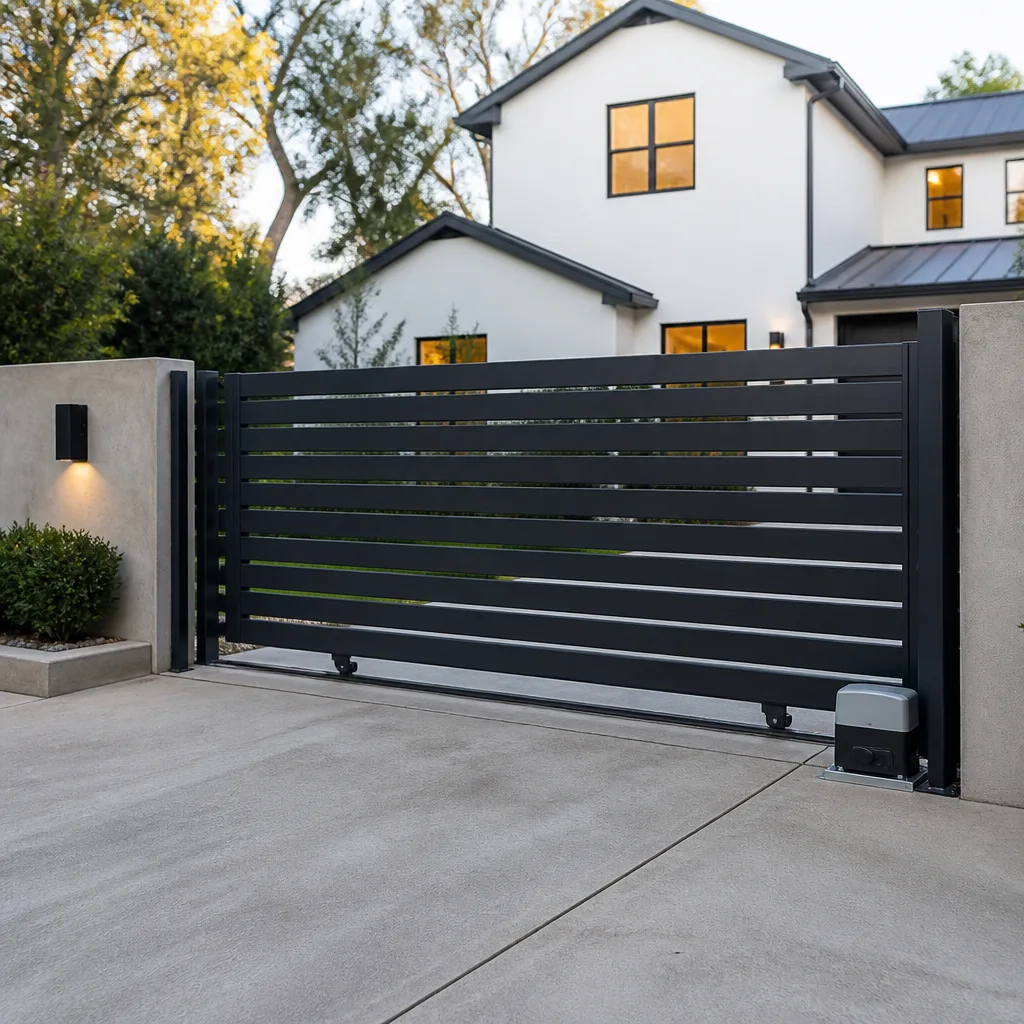
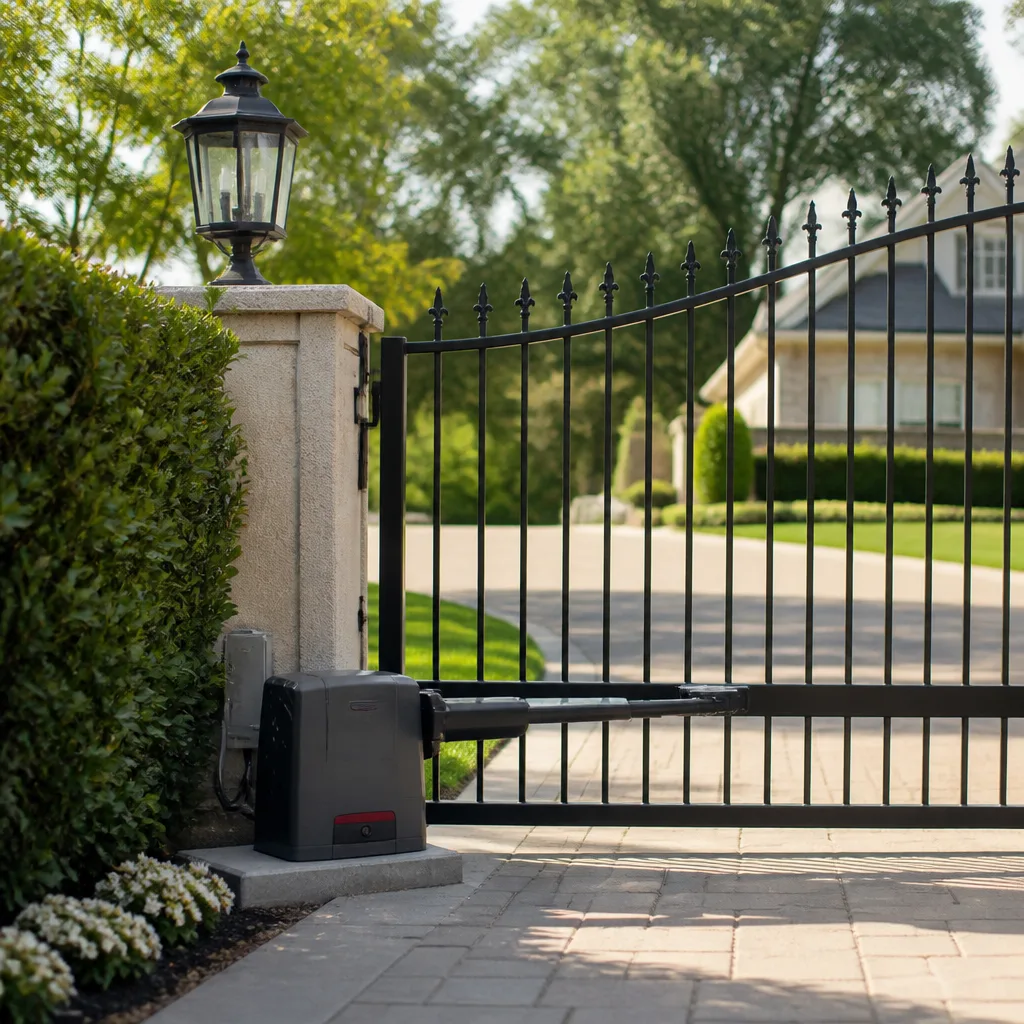
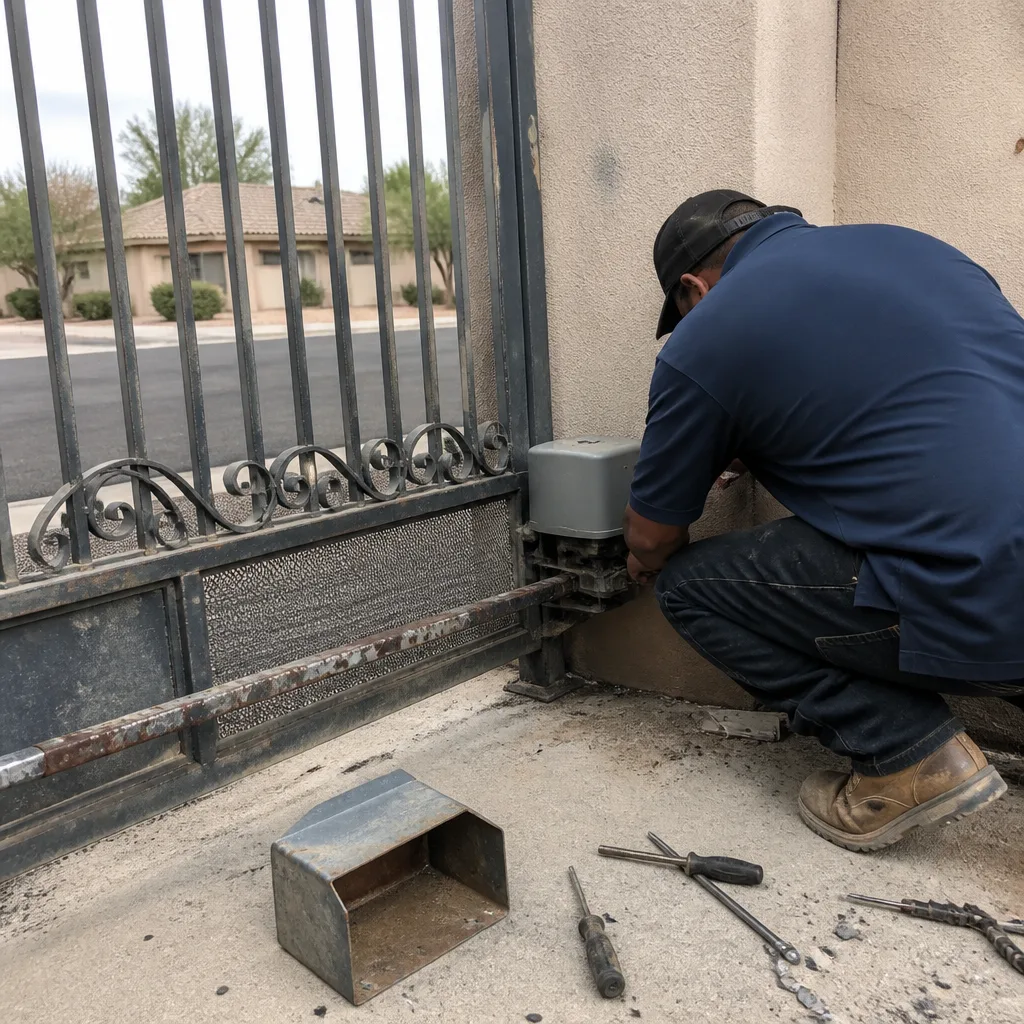 Before
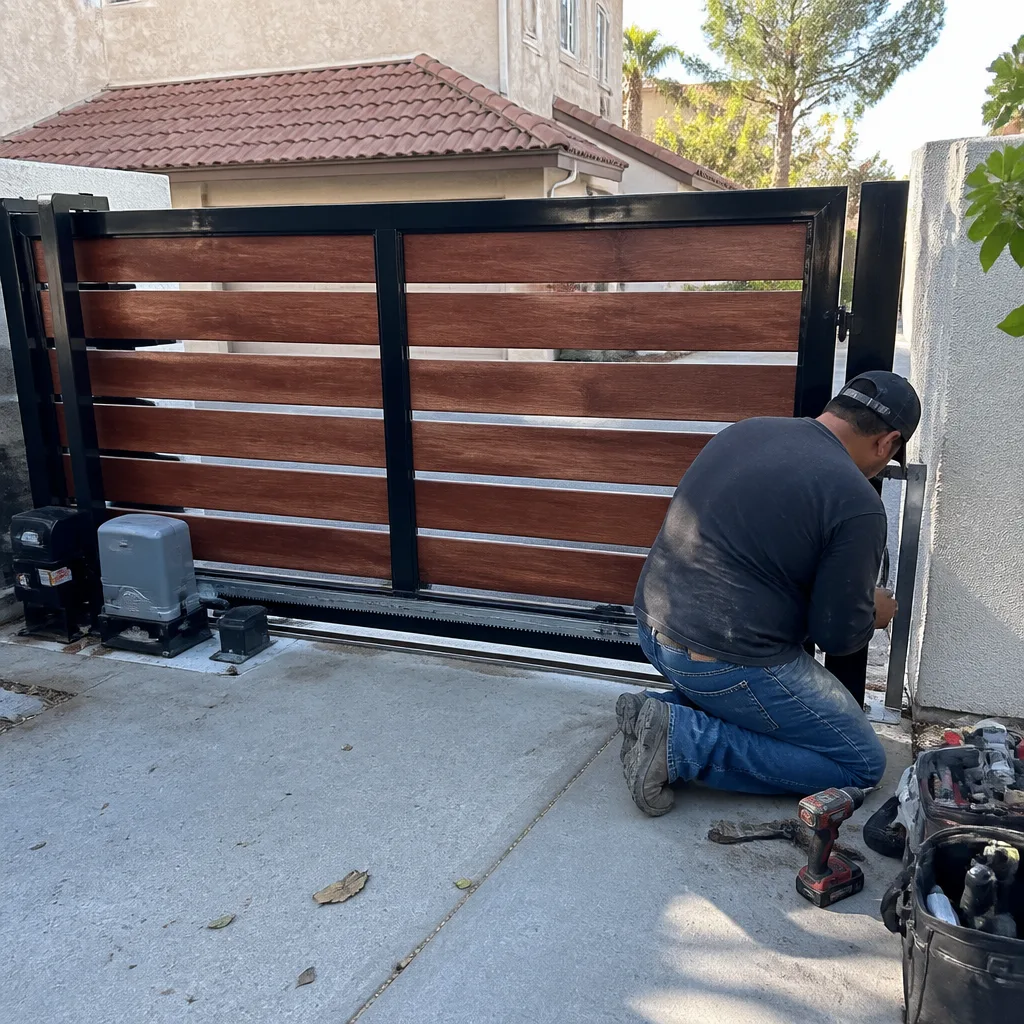 After
After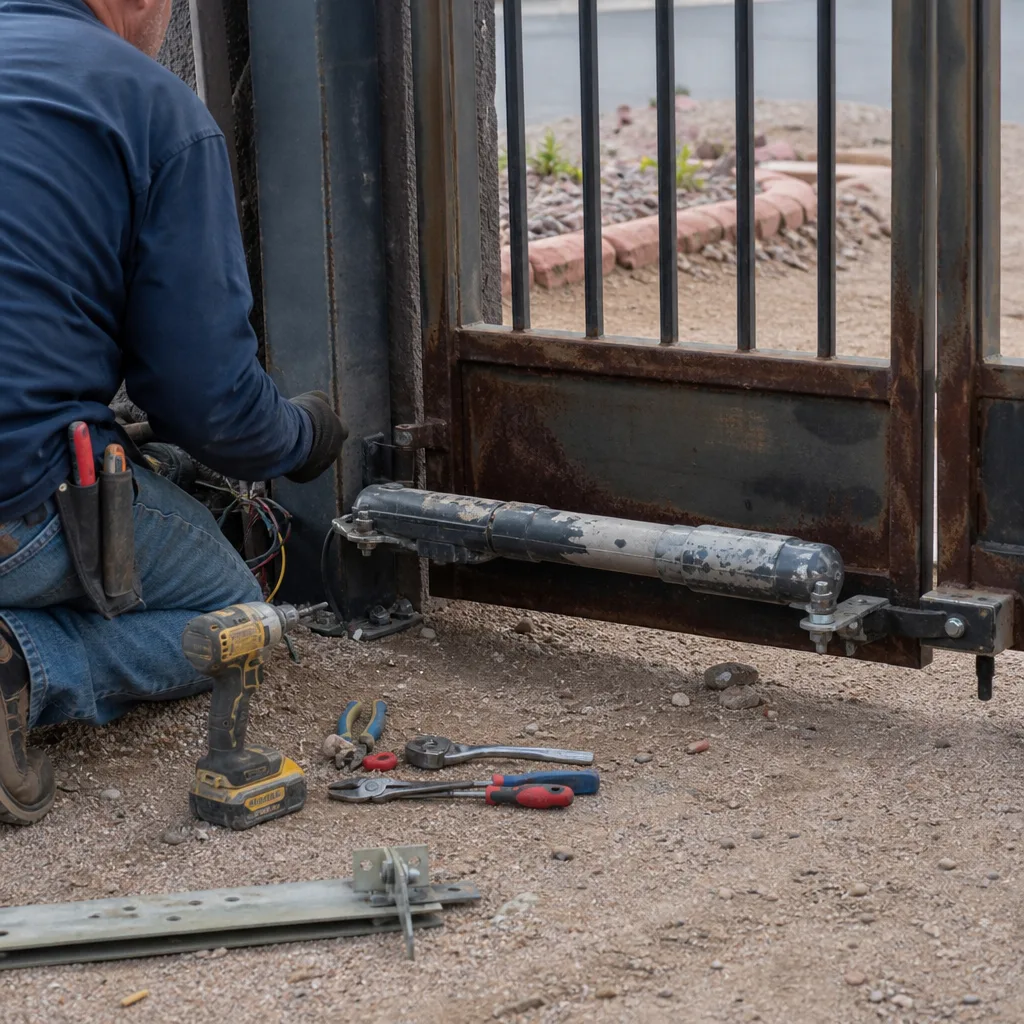 Before
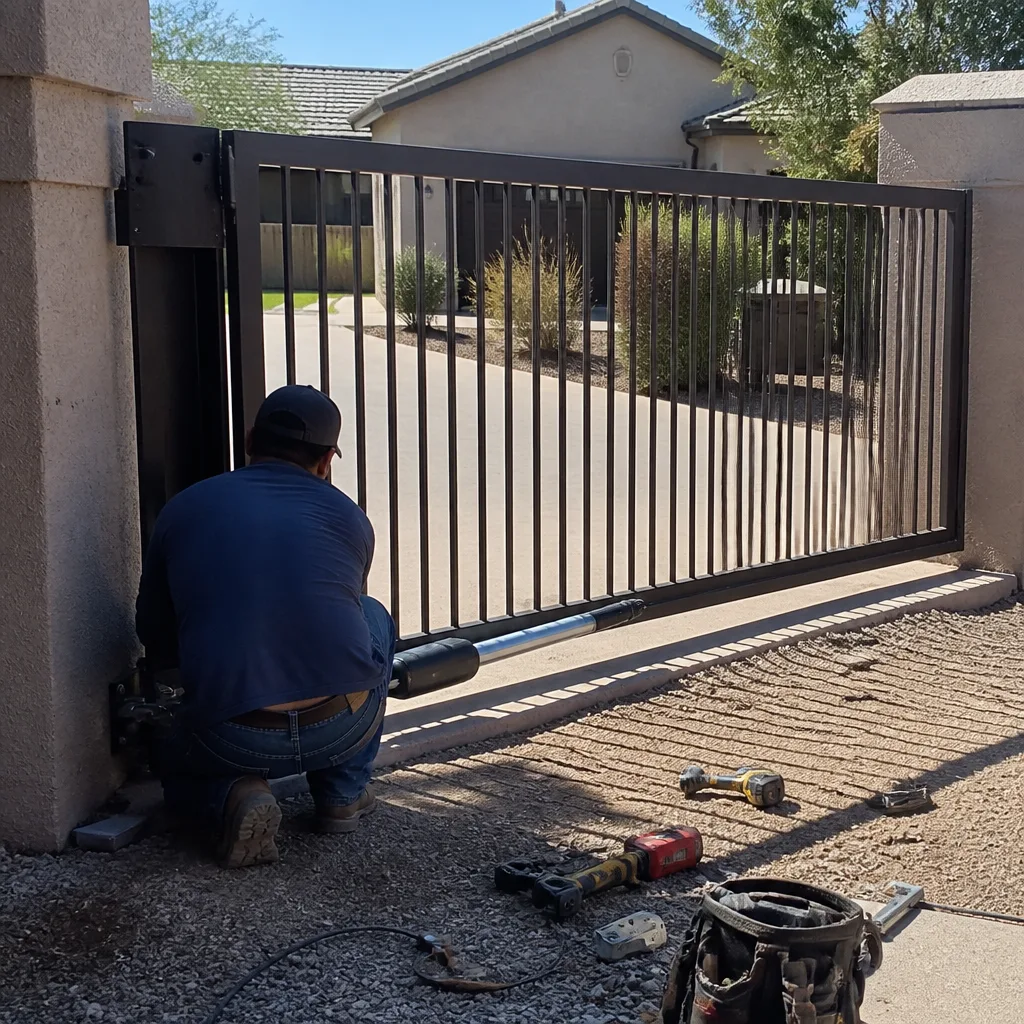 After
After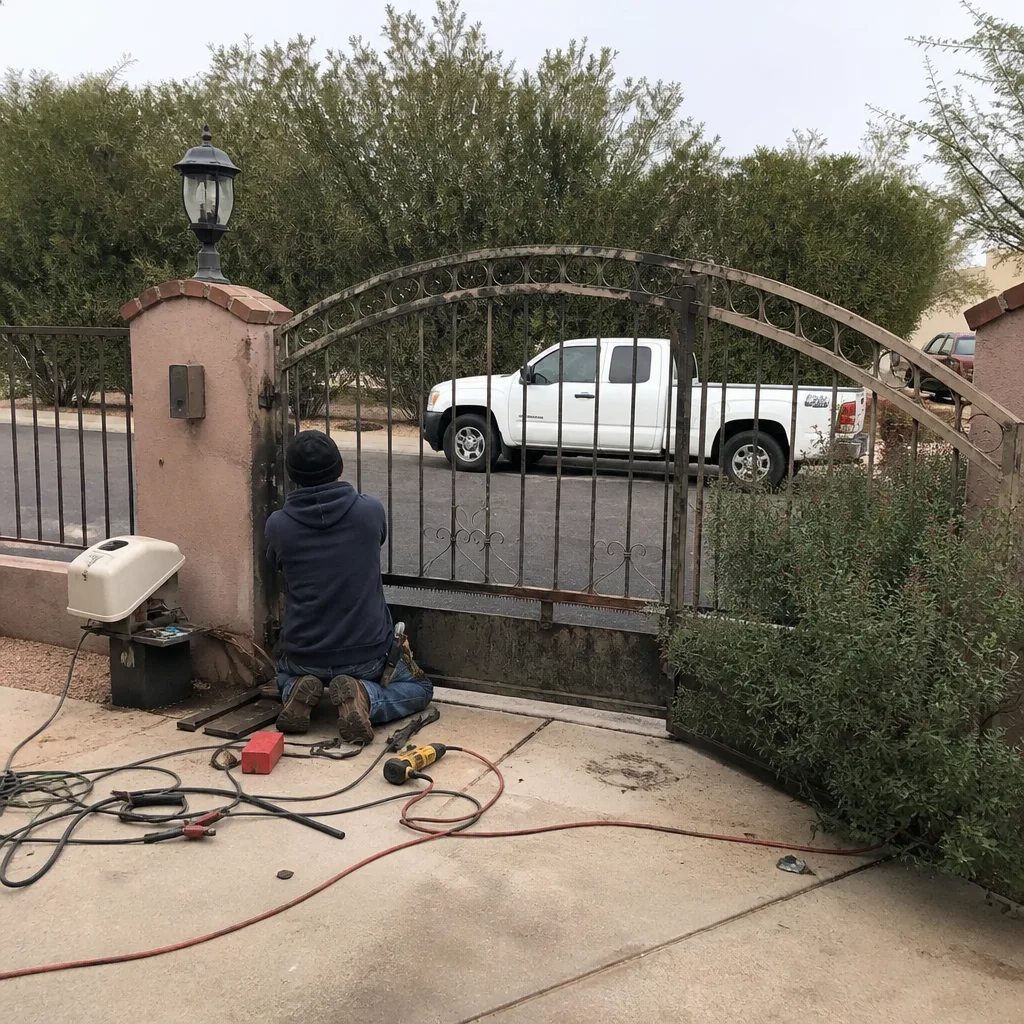 Before
 After
AfterSeasonal Gate Repair Care for Scottsdale: Year-Round Homeowner’s Guide
Scottsdale averages 299 sunny days per year, which sounds like easy conditions for outdoor equipment - until you account for 114°F peaks, 60-mph haboob winds, and overnight lows that drop 45 degrees below the afternoon high in January. Most gate owners here treat maintenance as a once-a-year task, usually in March or April before the heat arrives. That single checkup misses three distinct failure windows: the thermal cycling of December through February, the humidity spikes of July and August monsoons, and the caliche expansion cycles that peak in late spring. In The Complete Guide to Gate Repair in Scottsdale, we’ll walk through what each Scottsdale season actually does to your gate at the component level, and what to check before each stress window locks in.
Quick Answer
Scottsdale gates need four distinct maintenance checks per year, not one: a pre-summer inspection in April for UV degradation and thermal expansion, monsoon prep in June for drainage and seal integrity, a post-storm check in September for water intrusion and sand infiltration, and a winter review in December for cold-start motor strain and photoeye condensation. Skipping any of these leaves your gate vulnerable to the specific failure mode that season produces.
Table of Contents
- The April Pre-Summer Checklist: Six Items Before 100°F Locks In
- Monsoon Season: Humidity, Dust, and the Haboob Factor
- Post-Monsoon Inspection: What the Storms Leave Behind
- Winter Gate Behavior: Why January Mornings Matter
- Component-Level Breakdown: What Each Season Degrades
- The Documentation Habit: What to Record and When
- Common Mistakes to Avoid
- When to Call a Professional
- Frequently Asked Questions
 Before
 After
AfterThe April Pre-Summer Checklist: Six Items Before 100°F Locks In
By mid-April in Scottsdale, the daily high has crossed 90°F and the trajectory is clear. This is your last comfortable window to inspect and adjust before the three-month stretch where surface temperatures on metal gate components can exceed 160°F. We’ve found that gates that pass this six-point check rarely fail during peak summer; gates that skip it show up in our July call log with predictable patterns.
1. Inspect wiring jacket condition
UV degradation on PVC wiring jackets accelerates dramatically once temperatures sustain above 105°F. Look for chalking (a white, dusty film), cracking at flex points, and hardening where cables enter conduit. In Scottsdale’s intensity, a jacket that looks fine in March can be brittle enough to snap by June. We replace any jacket showing surface cracking before the heat deepens it.
2. Verify limit switch settings
Thermal expansion changes where a gate physically stops. A swing gate that closes cleanly at 75°F may not reach its closed position at 110°F because the metal frame has expanded. We check limit switch settings with the gate at operating temperature, not in the cool of morning, and we photograph the final settings under Clause 4 of our Haven Standard.
3. Clear drainage paths around operator housing
Caliche, the calcium-carbonate-rich soil common in Scottsdale’s desert substrate, expands when it absorbs the first sustained moisture of the year. If your operator housing sits in a low spot or against a wall where runoff collects, April is when that caliche begins to swell against the housing base. Clear a 6-inch drainage gap and check that the housing sits level.
4. Test battery backup under load
Gate motor batteries lose capacity faster in heat. We load-test every backup battery in April, not just check voltage. A battery that reads 12.6V at rest may drop below operational threshold the moment the motor draws current. In Scottsdale, we replace batteries showing more than 30% capacity loss before summer.
5. Lubricate with high-temperature grease
Standard lithium grease thins and runs above 120°F. We switch to molybdenum-disulfide or synthetic high-temperature formulations on all Scottsdale gates before June. The wrong lubricant in summer becomes a dirt magnet; the right one maintains film strength through August.
6. Photograph current component condition
Before any seasonal change, we document baseline condition: photoeye alignment readings, motor amp draw, hinge wear patterns. When a gate fails in July, we compare against this April record to identify what changed. Under our Haven Standard, this photo record is filed with the job and left with the homeowner.
Monsoon Season: Humidity, Dust, and the Haboob Factor
Scottsdale’s monsoon season runs roughly June 15 through September 30, with the most intense activity concentrated in July and August. During this window, relative humidity can spike from 10% to 80% in a single afternoon, and dust storms (haboobs) can reduce visibility to near-zero while depositing fine particulate into every exposed mechanical cavity. Your gate faces three distinct threats: moisture intrusion, thermal shock from rapid temperature drops, and abrasive contamination.
Photoeye lens fogging and recovery
The infrared photoeye beam that stops your gate if something crosses its path depends on optical clarity at both transmitter and receiver. When humidity spikes, lenses fog. The critical question is whether they clear within 30 minutes of the humidity drop. Lenses that stay fogged have micro-pitting or degraded coatings that trap moisture. We test this in Scottsdale gates by simulating a humidity spike with a damp cloth, then timing recovery. If fog persists beyond 30 minutes, we replace the lens assembly before the next storm cycle.
Control box seal integrity
Every gate operator has a NEMA rating for environmental protection, but gaskets degrade. We inspect control box seals in June, before the first major storm, and we check the NEMA rating against the installation location. A NEMA 3R box mounted in direct Scottsdale sun may have gasket compression set that a shaded installation doesn’t. We replace gaskets showing any permanent deformation.
Haboob preparation: the 48-hour rule
When a dust storm warning issues for the Phoenix-Scottsdale corridor, we advise homeowners to cycle their gate fully open and fully closed three times within 48 hours after the storm passes. This redistributes lubricant and clears particulate from gear teeth before it compacts. We also check breather vents on Viking and Elite operators, which can clog with fine dust and create a pressure differential that draws moisture in during the next humidity spike.
Drainage re-check after first storm
The first significant monsoon rainfall reveals actual drainage patterns, which may differ from April assumptions. We check operator housings, conduit entries, and low-voltage junction boxes after the first 0.5-inch storm. Water staining, even if dry now, indicates a path that will repeat.
Post-Monsoon Inspection: What the Storms Leave Behind
By late September, Scottsdale’s humidity drops and the storm pattern shifts to Pacific moisture. This is the inspection window that most homeowners skip, because the gate is working again and the emergency feels past. But monsoon damage is often progressive: moisture starts a process that completes its failure weeks or months later.
- Control box interior inspection. Remove the cover and examine every terminal block, relay, and circuit board with a flashlight. Look for white or green corrosion bloom, particularly on low-voltage connections. Even a dry box now may have harbored moisture in August. We photograph any corrosion and replace affected components; cleaning alone leaves active chemistry that continues to degrade.
- Conduit and underground cable check. Caliche expansion during monsoon moisture can crack PVC conduit. We pull a inspection tape through every underground run to verify integrity. In Scottsdale’s soil, a cracked conduit fills with sediment that hardens like concrete; the cable may test fine now but fail to move for future replacement.
- Operator housing sand infiltration. Fine dust from haboobs penetrates gasketed housings through pressure cycling. We open housings on Ghost Controls and Mighty Mule operators (which tend toward lighter sealing) and check for sediment accumulation on gear faces. Abrasive contamination accelerates wear exponentially; we clean and relubricate if any grit is present.
- Photoeye realignment verification. Storm winds shift mounts. We check photoeye alignment with a digital level and measure beam path clearance. A photoeye knocked 2 degrees out of alignment may still function in clear conditions but fail when lens fogging or dust reduces signal margin.
- Battery capacity test. Monsoon temperature cycling stresses batteries differently than summer heat alone. We load-test again in October and compare against April baseline. Any battery showing accelerated degradation gets replaced before winter cold-start demands increase.
We document every post-monsoon finding with dated photos, filed under the same job record as the April pre-summer inspection. When a gate fails in February, this September record often reveals the origin.
Winter Gate Behavior: Why January Mornings Matter
Scottsdale winters are mild by national standards, but the temperature swing is extreme. A January morning at 36°F followed by an afternoon at 78°F produces thermal cycling that stresses gate components differently than sustained heat. We pay attention to three specific winter symptoms that homeowners often dismiss.
Slower operation on cold starts
A gate that takes 14 seconds to open at 8 a.m. but 10 seconds at 2 p.m. is telling you something. Grease viscosity increases at low temperature; if the lubricant is wrong for the range, the motor works harder and draws more current. We log cycle times at consistent temperatures and compare. A 40% or greater speed variation indicates lubricant mismatch or developing mechanical resistance. In Scottsdale’s winter, we switch to multi-viscosity formulations that maintain consistent film strength from 30°F to 110°F.
Photoeye condensation in morning hours
Overnight radiative cooling in Scottsdale’s clear desert sky can drop lens temperature below dew point, even at low absolute humidity. Condensation that clears by 9 a.m. is normal; condensation that persists past 10 a.m. or triggers false obstruction signals indicates lens degradation or mounting that traps moisture. We check drainage angle on photoeye housings; they should tilt slightly downward so condensation runs off.
Control board thermal cycling fatigue
Circuit boards expand and contract with temperature. Solder joints on power components experience the most stress. We inspect boards in January for hairline cracks around heavy components: relays, capacitors, transformer mounts. This inspection requires removing the board, which we do only with power locked out. In our experience, boards that show cracking in January were stressed by summer heat; the winter cycle completes the failure. We photograph and replace.
Metal fatigue at weld points
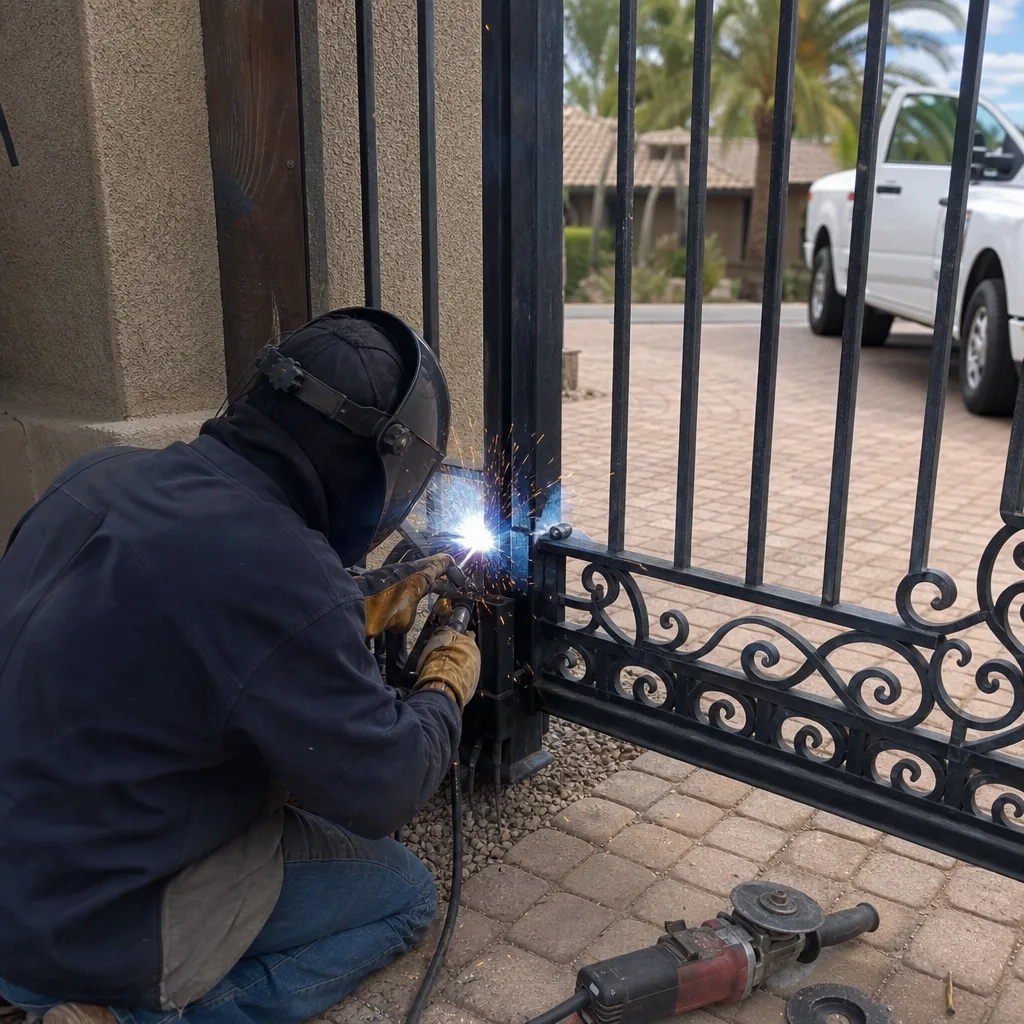
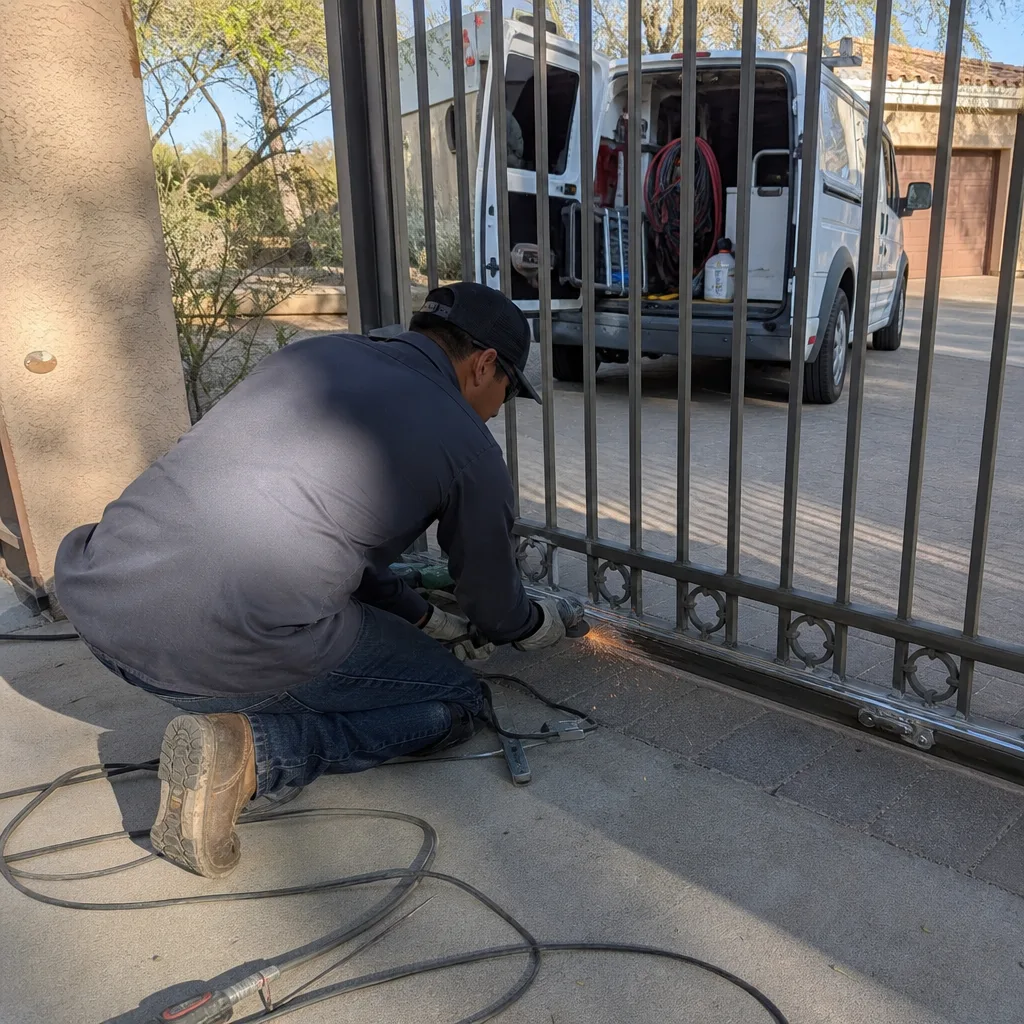
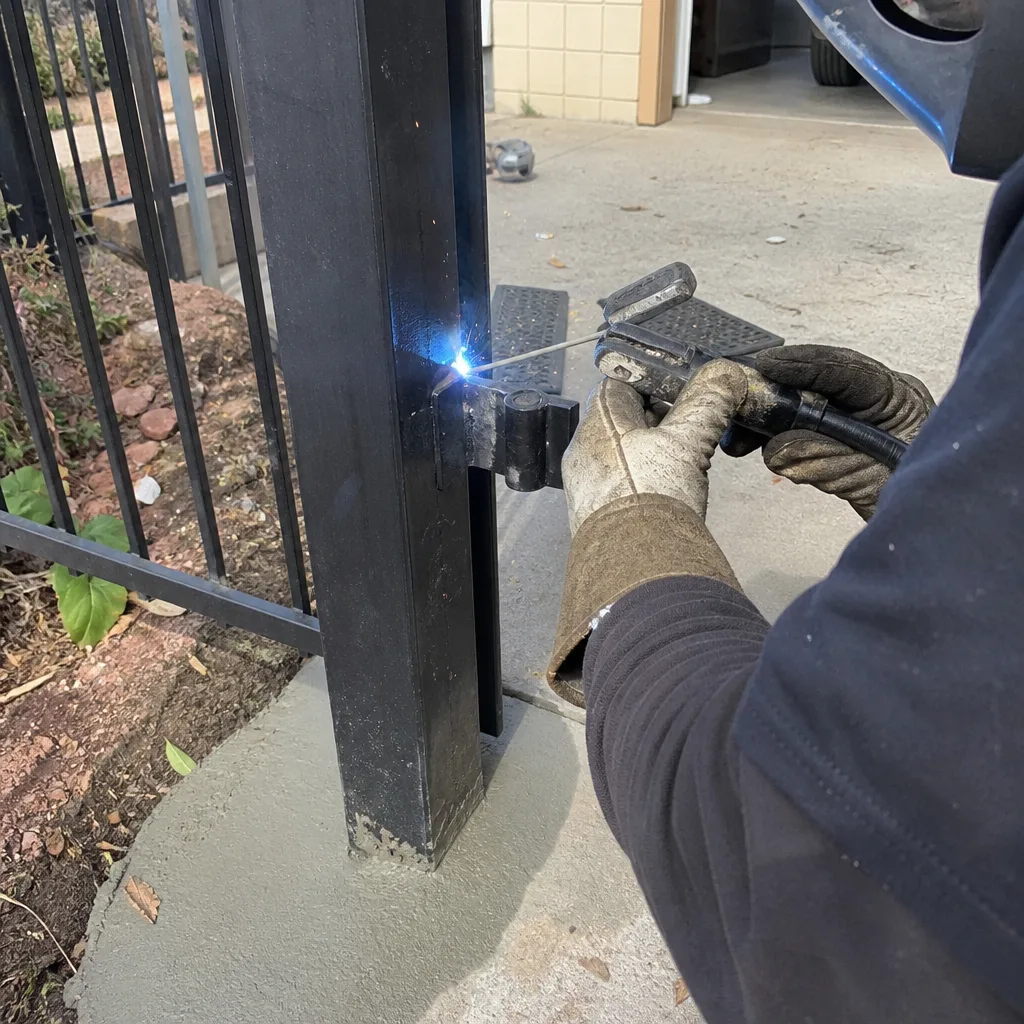
Steel gates in Scottsdale experience more annual thermal expansion cycles than gates in temperate climates. A gate that cycles 365 days per year through 45°F daily swings accumulates fatigue. We inspect weld points on custom steel gates, particularly at hinge attachments and picket-to-frame connections, for crack initiation. Early catch means weld repair; late catch means gate replacement.
Component-Level Breakdown: What Each Season Degrades
Generic maintenance advice says “heat is bad” and “moisture is bad.” For Scottsdale gates, the specific degradation mechanism matters because it determines what you inspect, what you replace, and what you document.
| Component | Summer Threat | Monsoon Threat | Winter Threat |
|---|---|---|---|
| PVC wiring jackets | UV photodegradation, plasticizer outgassing | Capillary moisture ingress at cracks | Low-temp embrittlement |
| Gate motor capacitors | Electrolyte evaporation, reduced capacitance | Humidity corrosion of terminals | ESR increase from thermal cycling |
| Photoeye lenses | UV hazing, reduced transmittance | Fogging, micro-pitting from dust impact | Condensation, false obstruction triggers |
| Steel weld points | Thermal expansion stress | Corrosion initiation at coating breach | Thermal contraction fatigue cycling |
| Caliche-surrounded conduit | Soil desiccation, shrinkage gaps | Expansion cracking, moisture intrusion | Freeze-thaw heave (rare but real) |
| Battery backup | Accelerated capacity loss | Terminal corrosion from humidity | Cold-crank amp reduction |
| Control board solder joints | Thermal expansion stress | Electrochemical migration | Contraction fatigue, crack propagation |
This table guides our inspection priorities. A gate in McCormick Ranch with mature landscaping and partial shade faces different UV exposure than a gate in north Scottsdale with full southern exposure. We adjust the emphasis, not the checklist.
On DoorKing and Elite operators, we’ve noticed a pattern: the ribbon cable connections between display board and main processor are particularly sensitive to thermal cycling. We inspect these specifically in winter and reseat with contact enhancer if any oxidation is visible. On Viking operators, the limit switch potentometers can drift with vibration and temperature; we verify settings quarterly, not annually.
The Documentation Habit: What to Record and When
The Vance Gate Repair Scottsdale home page explains our Haven Standard: written price before work starts, documented record when we leave. For seasonal maintenance, documentation serves a second purpose. It creates a time series that reveals degradation trends before they become failures.
What to record at each seasonal check:
- Motor amp draw at start and at mid-travel, with ambient temperature noted
- Photoeye alignment angle and beam path clearance measurement
- Gate cycle time, full open to full close, with temperature
- Battery voltage at rest and under 10-amp load
- Limit switch position readings (digital or mechanical)
- Photographs of wiring condition, weld points, and component labels
We file these with the job record and leave copies with the homeowner. When a gate fails, we compare current readings against this history. A motor that drew 3.2 amps in April and 4.8 amps in October has a developing mechanical issue, not a random failure. This is the difference between repair and replacement: the documented trend tells us whether the motor is failing or the gate is binding.
For gate motor and opener service in Scottsdale, we apply the same documentation discipline whether the call is for repair or routine maintenance. Every visit leaves a record.
Common Mistakes to Avoid
- Scheduling one annual checkup in March. That single inspection catches pre-summer issues but misses monsoon water intrusion, winter thermal cycling, and post-storm sand contamination. By the time the next March arrives, three failure windows have passed unexamined.
- Using standard lithium grease year-round. In Scottsdale summer, this lubricant runs off vertical surfaces and attracts dust. By September, the gate is operating on grit, not grease. We see this cause premature gear wear on swing-gate operators.
- Ignoring slower winter operation as “normal for cold.” Some slowdown is expected, but a 40% or greater change indicates mechanical resistance or lubricant mismatch. Logging the actual seconds reveals the difference.
- Pressure-washing the gate and operator. The force drives water past seals and into control boxes. In Scottsdale’s low humidity, surface water evaporates quickly; trapped water in enclosures does not, and it carries dissolved minerals that corrode terminals.
- Replacing a battery based on voltage alone. A gate motor battery can show 12.4 volts at rest and fail under load. We load-test every battery; voltage without load is a meaningless number.
- Assuming a NEMA 3R rating means monsoon-proof. The rating applies to new, properly installed equipment. Gasket compression set, mounting distortion, and UV degradation all reduce actual protection. We verify seal condition, not just label rating.
- Waiting for failure before calling. Emergency gate repair in Scottsdale costs more than scheduled maintenance, and the failure rarely occurs at a convenient time. Documented seasonal checks catch issues in the April window, not the July emergency.
When to Call a Professional
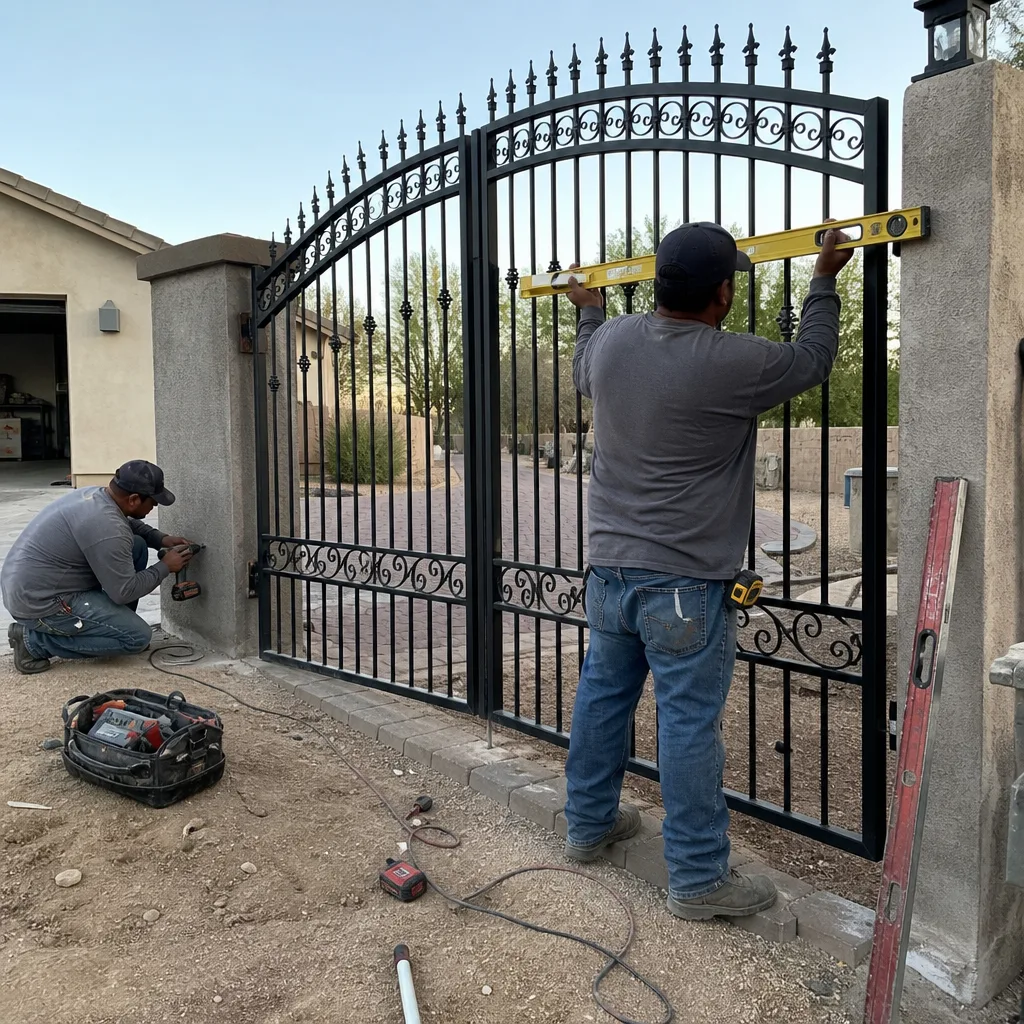
Some gate symptoms indicate conditions that risk injury or compound damage if addressed without proper equipment, which is why DIY vs Professional Gate Repair: The Scottsdale Homeowner’s Decision Guide matters for safety. High-tension spring-assisted gates, commercial-grade operators with stored energy in capacitors, and any welding repair require training and tools that most homeowners don’t maintain.
Call a technician if you observe: arcing or burning smell from the control box; gate movement that is erratic, not merely slow; visible weld cracks or structural deformation; photoeye beams that won’t align or clear; or any water staining inside enclosures. These are not maintenance items; they are repair signals.
Gate Repair from Vance Gate Repair Scottsdale offers free estimates in Scottsdale. We’ll review your gate’s condition, document what we find, and provide a written price before any work starts under Haven Standard Clause 1. Call (928) 363-3921. Our live answer is available at any hour; there’s no voicemail loop or callback queue.
For new gate installation in Scottsdale, we apply the same seasonal knowledge to material and component selection, specifying hardware rated for the actual temperature range and exposure of your specific site.
Frequently Asked Questions
A seasonal inspection and tune-up for a residential automatic gate in Scottsdale typically runs $150-$280, depending on gate type, operator brand, and whether the visit includes component replacement. We provide a written price before any work starts, and we itemize what the inspection covers. Call (928) 363-3921 for an exact quote on your gate - estimates are free.
Homeowners can handle visual inspection, cleaning photoeye lenses, and clearing drainage paths. We do not recommend DIY work on high-tension spring systems, electrical connections inside control boxes, or limit switch adjustment, as these carry injury risk and can void operator warranties. For more guides & resources on the inspection items we described in the April and post-monsoon checklists, a homeowner with a flashlight, camera, and notepad can gather useful information. For adjustment, testing, and repair, a trained technician is the safer choice.
Grease thickens at low temperature, increasing mechanical resistance. In Scottsdale’s desert winter, overnight radiative cooling can drop gate metal to 40°F even when days reach 70°F. If your gate is 30% or slower on cold starts than on warm afternoons, the lubricant specification is likely wrong for the temperature range. We replace with multi-viscosity synthetic formulations that maintain consistent performance from 30°F to 110°F.
Haboob dust is extremely fine and abrasive. It penetrates operator housings through pressure cycling and breather vents, contaminating grease and accelerating gear wear. It also deposits on photoeye lenses, reducing beam transmittance. After any major dust storm, cycle your gate fully three times to redistribute lubricant, then inspect photoeye lenses for film accumulation. If operation feels gritty or photoeyes show reduced sensitivity, schedule a housing inspection and cleaning.
The Haven Standard is our documented operating protocol: written price before work starts (Clause 1), documented photo record of what was found and what was done (Clause 4), and the 365-Day Done Right Promise covering all completed work. It applies to every visit, including seasonal maintenance. You receive a written scope and price before we begin, and a photo log when we leave. There is no separate charge for documentation.
Most gate motor batteries in Scottsdale need replacement every 2-3 years, but heat accelerates degradation. We load-test batteries at the April pre-summer and October post-monsoon inspections, and we replace any showing more than 30% capacity loss. A battery that tests marginal in October often fails completely in January cold starts. We never recommend waiting for complete failure; the cost of an emergency service call exceeds preventive replacement.
The Bottom Line
Scottsdale’s gate calendar has four distinct stress windows, each degrading different components through specific mechanisms. A single annual checkup in March catches only the pre-summer window; it leaves your gate exposed to monsoon moisture intrusion, winter thermal cycling fatigue, and spring caliche expansion. The homeowners who avoid emergency calls are those who inspect and document at each transition: April for UV and heat preparation, June for seal and drainage verification, September for post-storm water and sand damage, and December for cold-start behavior and weld fatigue. Record what you find, compare against prior readings, and address trends before they become failures.
Written by Adrian Vance, Owner at Vance Gate Repair Scottsdale, serving Scottsdale since 2014.