
Last updated September 22, 2026
Free on-site gate assessment - hinges, posts, and your LiftMaster or Nice gate operator checked before anything is quoted
The assessment is free and the quote is the invoice.


 Before
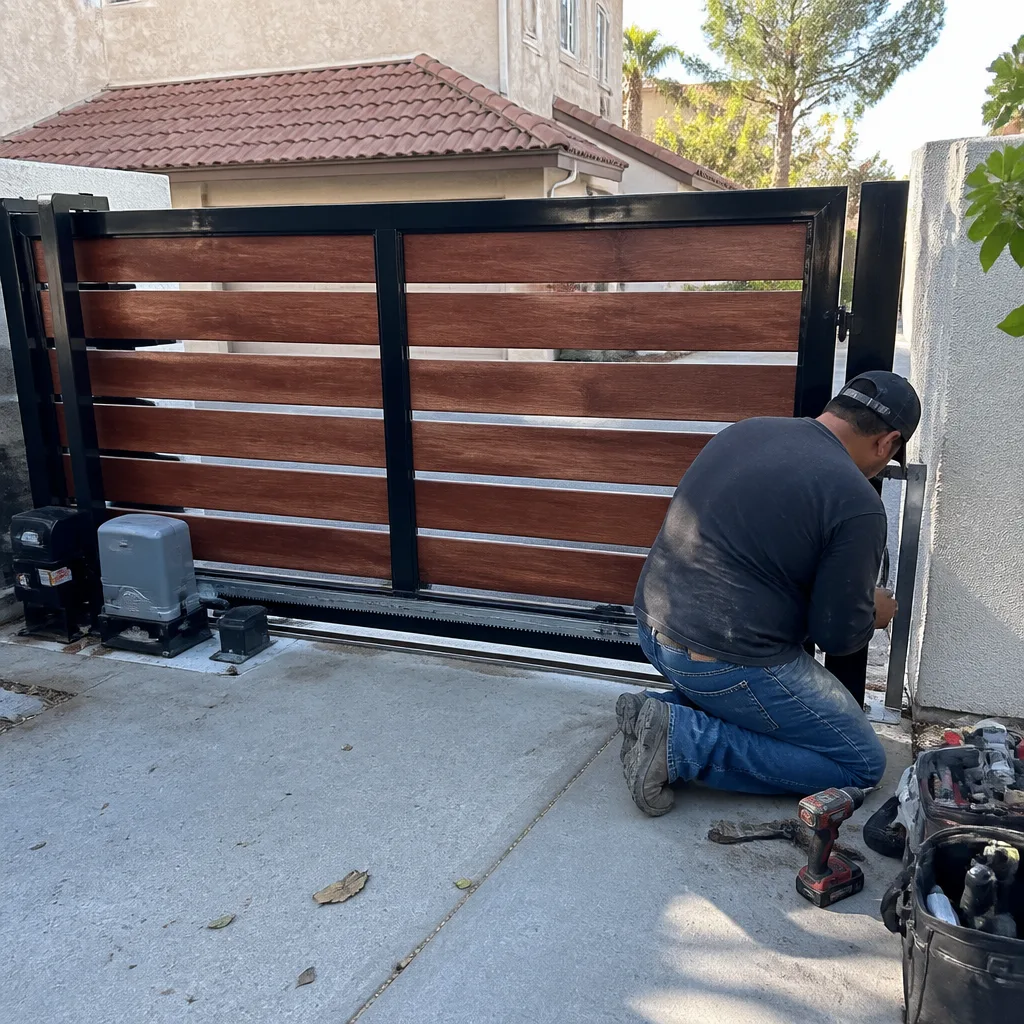 After
After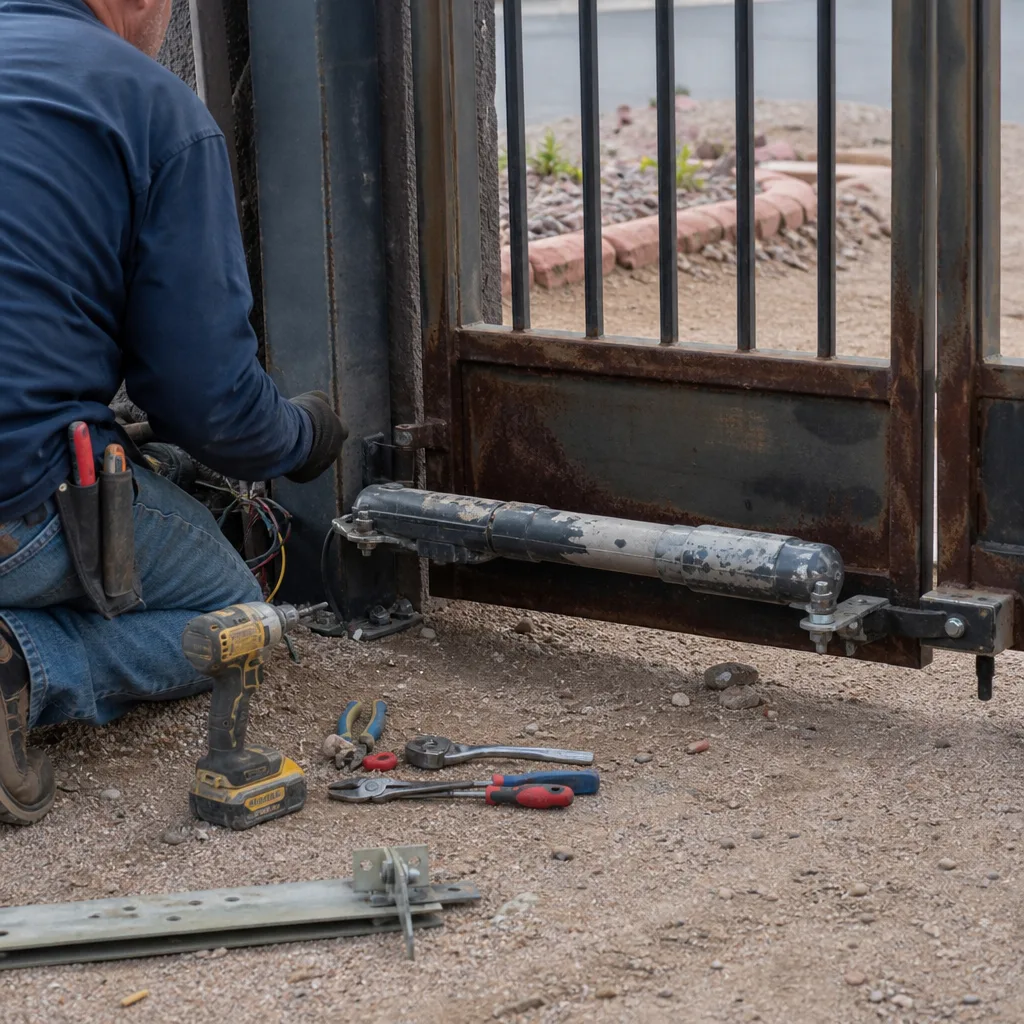 Before
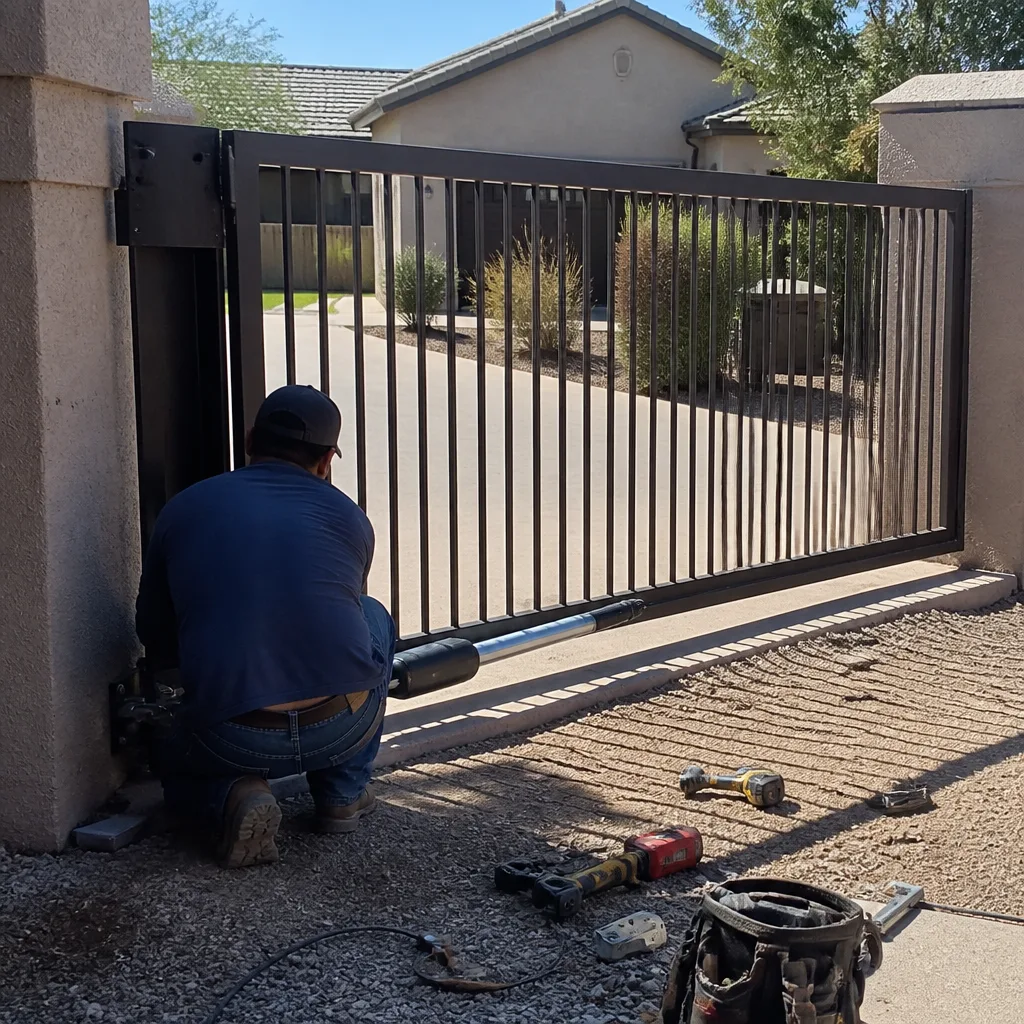 After
After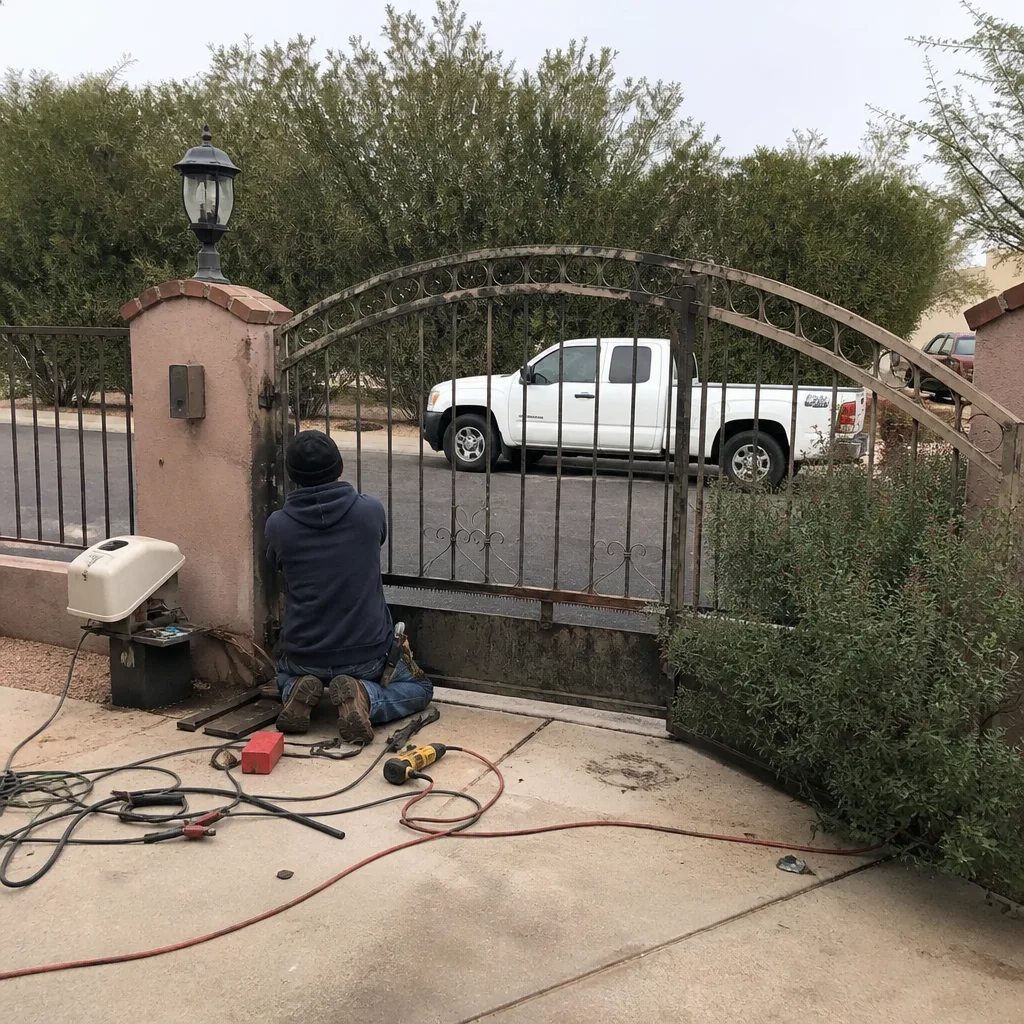 Before
 After
AfterGate Repair Warning Signs: A Scottsdale Homeowner’s Reference Guide
A gate that hesitates two seconds before moving isn’t a minor nuisance. It’s a control board or limit switch working around a fault, and that workaround has a finite number of cycles left. In Scottsdale, where summer temperatures push gate motors past their thermal limits and monsoon dust infiltrates photo-eye housings, the gap between “acting a little off” and “won’t open at all” is often measured in weeks, not months. This guide shows you how to read the two categories of warning signs - observable behaviors and measurable readings - so you know when to schedule maintenance, when to call our Gate Repair services, and when to stop using the gate entirely.
Quick Answer
Gate repair warning signs in Scottsdale fall into two groups: behaviors you can see (reversing without cause, grinding noises, partial opening) and measurements you can take (cycle time increases, travel distance shortens, motor current draw rises). Most failing gates show both. The critical threshold is when a behavior becomes repeatable - if your gate reverses twice in the same direction on the same day, the fault is progressing and the gate is no longer reliable.
Table of Contents
- Observable Behaviors vs. Measurable Readings
- Symptom-to-Cause Table: What Each Behavior Means
- Aging vs. Failing: The Maintenance-to-Repair Threshold
- How to Document Gate Performance with a Stopwatch and Tape Measure
- The Scottsdale Battery Backup Fault That Looks Like Motor Failure
- Safety Issue vs. Inconvenience: When to Stop Using the Gate
- Common Mistakes to Avoid
- When to Call a Professional
- Frequently Asked Questions
- The Bottom Line
 Before
 After
AfterObservable Behaviors vs. Measurable Readings
Most homeowner guides stop at the behaviors. That’s useful but incomplete. A behavior tells you something is wrong. A measurement tells you what’s wrong and how fast it’s getting worse.
Observable behaviors are what you notice without tools. The gate reverses before reaching the closed position. You hear a grinding sound during the last six inches of travel. The motor hums but the gate doesn’t move. The remote works from thirty feet on Tuesday and only from ten feet on Thursday. These are symptoms, and they’re worth tracking.
Measurable readings are what a technician - or an attentive homeowner - records with basic tools. How many seconds does a full open-and-close cycle take? What’s the exact distance the gate travels from fully closed to fully open? What’s the voltage at the motor terminals under load? These numbers create a baseline. When we service a gate in Scottsdale’s McCormick Ranch or DC Ranch neighborhoods, we record these measurements during the first visit. On every return visit, we compare. A cycle time that crept from 14 seconds to 19 seconds over eight months tells a clearer story than “it’s gotten slower.”
The two categories interact. A grinding noise (behavior) paired with a travel distance that shortened by four inches (measurement) almost always points to a mechanical obstruction or a failing limit switch, not a motor problem. A motor that draws 8 amps on a cold morning and 12 amps by afternoon (measurement) explains why the gate reverses intermittently (behavior) - the thermal overload is tripping.
Under Vance Gate Repair Scottsdale home, we document both categories on every visit. The Haven Standard requires it: Clause 4 (Evidence on every job) means you get a photo log of what we found and a written record of every measurement we took.
Symptom-to-Cause Table: What Each Behavior Means
This table maps the most common behaviors we see in Scottsdale to their three most likely component causes. The percentages are drawn from our repair records since 2014, covering over 22,000 gates across nine automation brands including LiftMaster, FAAC, and Elite systems.
| Behavior | Most Likely Cause (45-55%) | Second Most Likely (25-35%) | Third Most Likely (10-20%) |
|---|---|---|---|
| Reverses without obstacle | Photo-eye misalignment or fouling | Limit switch drift | Control board logic fault |
| Grinds on close, smooth on open | Worn drive gear or rack | Gate frame sagging on hinge side | Limit switch set past mechanical stop |
| Opens partially (stops mid-travel) | Limit switch set short | Mechanical obstruction in track | Motor thermal overload (weak motor or high load) |
| Motor hums, gate doesn’t move | Broken shear pin or coupler | Seized bearing or wheel | Capacitor failure in single-phase motor |
| Remote range shrinking | Antenna damage or corrosion | Interference from new electronics | Receiver board degradation |
| Gate moves, then stops, then moves | Intermittent wire connection | Control board relay failing | Photo-eye beam flickering at edge of alignment |
A few Scottsdale-specific notes on this table. Photo-eye fouling from dust is more common here than in humid climates - the dry, fine particulate from desert landscaping settles on the lens and scatters the infrared beam. We see this frequently in properties near the McDowell Sonoran Preserve, where windborne dust is constant. The “grinds on close” pattern often appears on gates with steel frames that have been in service through five or more Scottsdale summers; thermal cycling fatigues the hinge side, and the gate settles by fractions of an inch until the rack and pinion bind.
When you call with a symptom, we can often narrow to one or two causes before we arrive. But we won’t quote a repair until we’ve measured. That’s Haven Standard Clause 1: the written price comes after diagnosis, before any work starts.
Aging vs. Failing: The Maintenance-to-Repair Threshold
Every gate system ages. Not every aging gate is failing. The difference matters because maintenance is scheduled and predictable; repair is urgent and more expensive. The threshold is repeatability.
A gate that occasionally reverses - once in March, once in June - is aging. Something is drifting out of spec, but the system is still compensating. A gate that reverses twice in the same week, or twice in the same direction on the same day, has crossed into failing. The compensation mechanism is exhausted.
Here are the specific observables that separate the two stages:
- Aging: Cycle time increases by less than 10% over six months. Occasional noise under load that doesn’t repeat. Remote requires two presses intermittently. Photo-eye needs cleaning once per season.
- Failing: Cycle time increases by more than 20% over any period. Noise that repeats in the same position every cycle. Remote requires multiple presses daily. Photo-eye misaligns after cleaning.
The maintenance-to-repair threshold also has a mechanical component. A swing gate hinge with 1/8 inch of play can be greased and tightened - that’s maintenance. The same hinge with 3/8 inch of play has elongated the bolt holes in the post bracket; the bracket needs replacement, and possibly the post has shifted. That’s repair.
In Scottsdale, the threshold often arrives faster than homeowners expect because of thermal stress. A gate motor rated for 50°C ambient temperature spends June through September in conditions that regularly exceed that. The motor doesn’t fail immediately; it fails after cumulative thermal cycles degrade the winding insulation. We’ve replaced more FAAC and Mighty Mule motors in August than in any other month, not because August is uniquely harsh, but because the degradation reached the threshold then.
Preventive maintenance - lubrication, limit switch verification, photo-eye alignment check - typically costs 60-70% less than the repair that follows threshold crossing. We offer maintenance scheduling for Scottsdale properties, with the same written scope and documented record as our repairs.
How to Document Gate Performance with a Stopwatch and Tape Measure
The two numbers that tell a technician more than any verbal description are cycle time and travel distance. Both take less than five minutes to measure, and both reveal trends that behaviors alone cannot.
Measuring Cycle Time
- Stand at the gate operator with a stopwatch (phone app is fine).
- Start timing when the motor first engages - the moment you hear the click or see movement.
- Time a complete open-and-close cycle, including any pause the gate takes at fully open.
- Record the date, time of day, and temperature if known.
- Repeat monthly, at the same time of day when possible.
What to expect: A healthy residential swing gate in Scottsdale typically cycles in 12-18 seconds. Sliding gates run 15-25 seconds depending on length. An increase of more than 3 seconds over six months indicates increasing mechanical load, electrical resistance, or limit switch drift. A cycle time that varies by more than 2 seconds between consecutive tests on the same day suggests an intermittent electrical fault - loose connection, failing relay, or capacitor issue.
Measuring Travel Distance
- With the gate fully closed, place a piece of masking tape on the ground at the trailing edge.
- Open the gate fully. Place a second piece of tape at the new position of the trailing edge.
- Measure the distance between the two pieces of tape with a standard tape measure.
- Record the date and measurement.
- Check monthly. If the distance shortens, the limit switch is drifting or the gate is encountering an obstruction.
These measurements are especially valuable in Scottsdale’s older neighborhoods like Old Town and the neighborhoods south of Camelback Road, where gates installed in the 2000s are now reaching the age where limit switches drift and mechanical components fatigue. When you call Gate Repair in Scottsdale with six months of recorded data, we arrive with the right parts and the right expectations. Without that data, we still diagnose, but the first visit is discovery; the second visit may be the repair.
Under the Haven Standard, we record these same measurements during our visit and leave you a copy. If you have your own baseline, we compare. The combination is the most efficient path to a lasting repair.
The Scottsdale Battery Backup Fault That Looks Like Motor Failure
Scottsdale homeowners misread this more often than any other symptom. The gate moves slowly, or stops mid-travel, or doesn’t respond to the remote. The natural assumption is motor failure. In our experience, roughly 30% of these calls are actually battery backup faults - the motor is fine, but it’s not getting adequate power.
Here’s the 30-second test that separates them:
- Disconnect the battery backup from the system (usually a pair of wires with a quick-disconnect, or a fuse you can pull - check your manual for location).
- Trigger the gate with the battery out of circuit.
- If performance returns to normal, the battery is the fault. If performance remains poor, the motor or control board needs diagnosis.
Why this happens in Scottsdale specifically: extreme heat degrades lead-acid and lithium backup batteries faster than moderate climates. A battery that tests at 12.4 volts at rest may drop to 9 volts under motor load, triggering the control board’s low-voltage protection. The motor never gets full power, so it behaves like a weak motor. The battery voltage recovers at rest, so a simple voltmeter test at the terminals looks normal.
We’ve seen this on LiftMaster and Elite systems with integrated battery backups, and on aftermarket battery kits installed to meet Arizona’s occasional power outage needs. The replacement battery typically runs $85-$180 depending on capacity and brand. A motor replacement, if you misdiagnose, runs $650-$1,400. The test is worth the thirty seconds.
Important safety note: if your gate uses a high-voltage operator (220V commercial-grade units, common on large estate properties in north Scottsdale), do not perform this test yourself. The internal capacitors hold charge after disconnect. Call a technician.
Safety Issue vs. Inconvenience: When to Stop Using the Gate
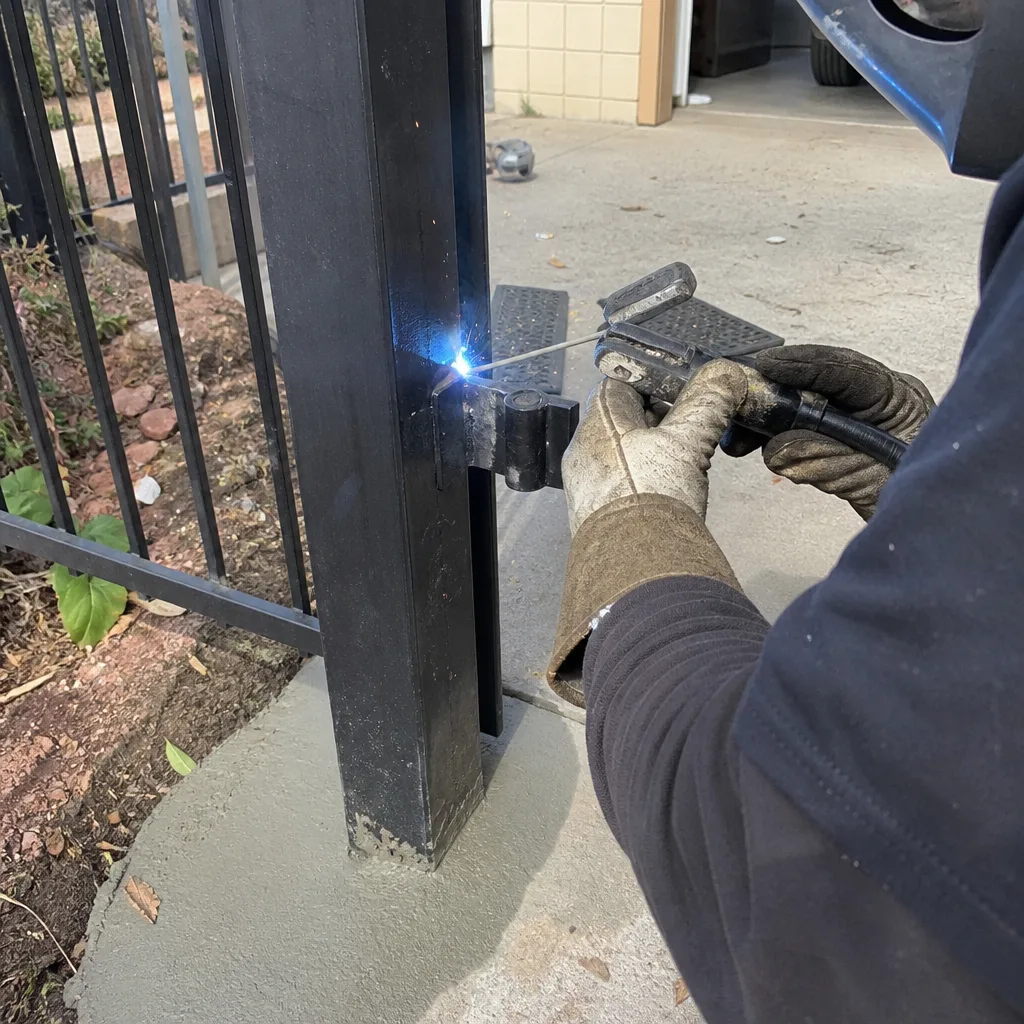
Some warning signs mean schedule a repair. Others mean stop using the gate now and call today. The distinction is whether the fault can cause injury or property damage before a technician arrives.
Stop using the gate immediately if you observe any of the following:
- The gate reverses direction without obstacle contact, especially if it reverses toward the open position while a vehicle is passing through.
- The gate moves at visibly different speeds during a single cycle - accelerating or decelerating unpredictably.
- You can manually push the gate off its track or out of its closed position with moderate force. The latch or magnetic lock has failed.
- The photo-eye beam is completely obscured, damaged, or disconnected, and the gate still operates. The entrapment protection is defeated.
- The control enclosure shows burn marks, melted components, or you smell electrical overheating.
These are not inconveniences. Under Arizona residential gate safety standards, an automatic gate must have functioning entrapment protection and predictable, controlled movement. A gate that reverses unpredictably can strike a pedestrian or vehicle. A gate that operates with defeated photo-eyes can crush an object or person in the path.
Schedule repair within the week if you observe:
- Gradual slowing of cycle time, with no unpredictable movement.
- Consistent grinding noise in the same position every cycle.
- Remote range gradually shrinking but still functional from normal distance.
- Gate completes full cycle but requires a second command to start.
These are reliability issues, not immediate safety hazards. They will progress to safety issues if ignored long enough, but you have time to schedule a technician during normal hours.
In Scottsdale, where many properties have gates on slopes or with significant fall zones behind them, the safety threshold is particularly important. A gate on a downhill slope that reverses unpredictably has both kinetic energy and gravity working against safety. We’ve documented these conditions in hillside properties near Pinnacle Peak and in the terraced neighborhoods east of Scottsdale Road. When we find them, we stop the system and explain before we leave - under Clause 4, the photo record includes the hazard and our recommendation.
Common Mistakes to Avoid
- Ignoring the first reversal. A gate that reverses once and then works normally for two weeks is not “fine now.” It’s a fault with an intermittent presentation, and intermittents always become repeatables. Document the date and call before the second event.
- Lubricating without cleaning first. Scottsdale’s fine dust mixes with grease to form an abrasive paste. We’ve opened gearboxes that looked like they contained grinding compound. Clean with a dry brush or compressed air, then apply the manufacturer-specified lubricant sparingly.
- Adjusting limit switches without measuring travel first. Homeowners often “fix” a partial-open problem by advancing the limit switch, without checking whether the gate is mechanically obstructed. This forces the motor against the obstruction and burns out the gearbox. Measure travel distance before adjusting limits.
- Replacing the remote battery three times before checking the antenna. Weak remote range is antenna or receiver in 60% of cases, not the remote itself. A new $4 battery is cheap, but three of them without diagnosis is false economy.
- Assuming a gate installed by a pool builder or landscaper was properly spec’d. In Scottsdale’s custom home market, gates are often installed by trades without gate-specific expertise. We’ve found operators rated for 500 cycles per day on residential gates that see 4 cycles - massive overkill, but also incorrectly mounted, poorly wired, and lacking proper entrapment protection. The installation age doesn’t indicate installation quality.
- Waiting for “the other symptom” before calling. Homeowners often want two or three confirming signs before they’ll schedule service. By the second symptom, the repair is usually more extensive. One repeatable symptom is sufficient.
- Using online video tutorials for high-tension components. Some swing gate operators, particularly certain FAAC and Viking models, use torsion-spring assist mechanisms. These store significant energy. A video made for a different model can direct you to release a component that isn’t designed for homeowner release. When in doubt, call before you touch.
When to Call a Professional
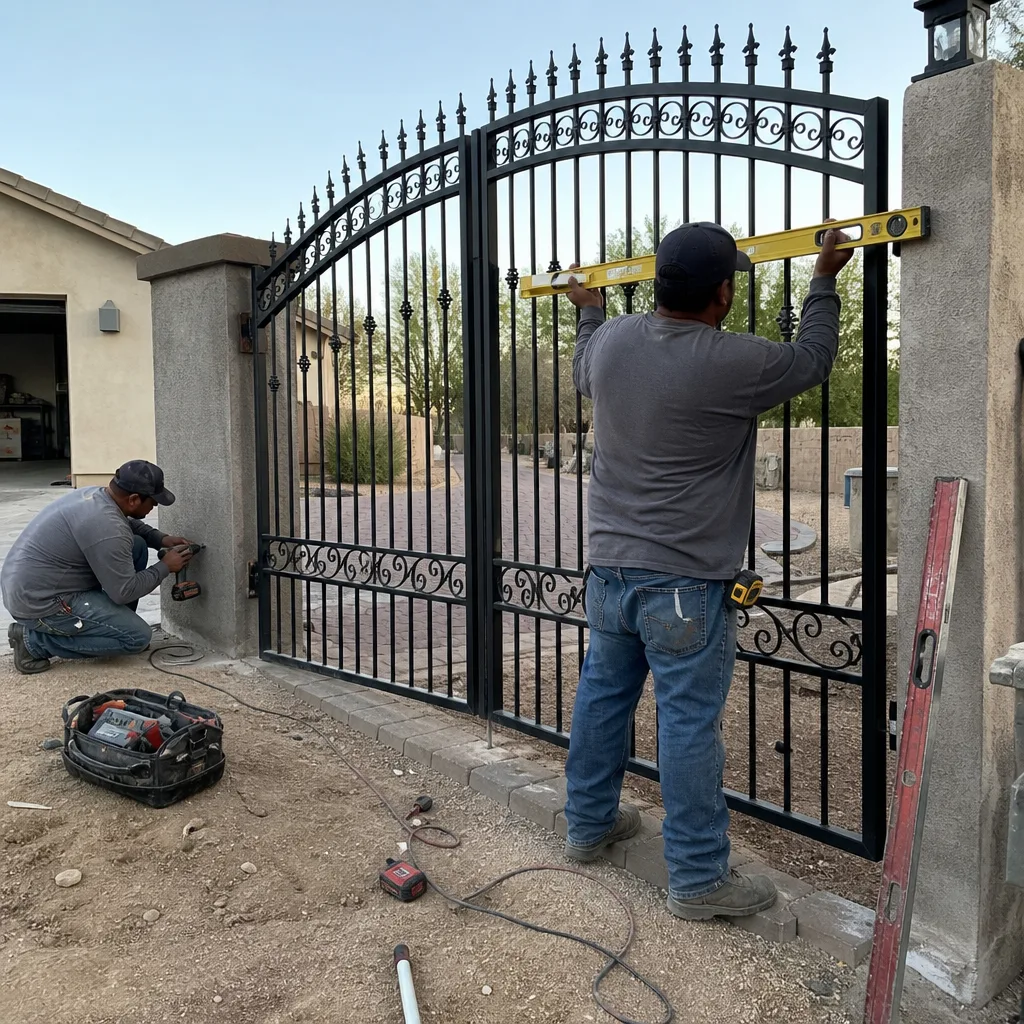
Call when a symptom becomes repeatable, when you’ve documented a measurement trend, or when any safety threshold is crossed. In Scottsdale’s climate, the progression from first symptom to failure is faster than in moderate regions - thermal stress and dust infiltration accelerate every mechanical and electrical degradation pattern.
Vance Gate Repair Scottsdale offers free estimates in Scottsdale - call (928) 363-3921. A live person answers 24 hours a day, seven days a week. We’ll ask about the symptoms you’ve observed, any measurements you’ve recorded, and the automation brand if you know it. We service nine major brands including LiftMaster, FAAC, and Mighty Mule, so we can work with whatever motor is already on your property rather than steering you toward replacement.
Every estimate includes the Haven Standard: written scope, written price before any work starts, and a documented photo record of what we find. The 365-Day Done Right Promise covers all completed work - if it’s not right, we make it right at no additional charge.
Frequently Asked Questions
Most residential gate repairs in Scottsdale range from $180 for a limit switch adjustment or photo-eye realignment to $850 for a control board replacement, with motor replacements running $650-$1,400 depending on brand and horsepower. We provide a written, itemized price before any work begins - no call-for-a-quote, no surprise invoice. Call (928) 363-3921 for a free estimate.
Same-day repair is available for most gate issues in Scottsdale when you call before early afternoon, and we stock common parts for LiftMaster, FAAC, Elite, and other major brands. Emergency safety issues get priority dispatch. For Gate Installation in Scottsdale or motor replacement, we schedule a free measure and provide a written price - that work is measured, ordered, and installed, not rushed.
A motor replacement includes removal of the failed unit, installation of the new operator, limit switch programming for your exact gate travel, force setting calibration, photo-eye alignment and testing, remote programming, and a full cycle test under load. Under the Haven Standard, you also receive a photo log of the installation, a written record of all settings, and the part number of every component installed. The 365-Day Done Right Promise covers the entire installation.
Yes. We handle the power run from your panel or existing disconnect to the operator, including conduit as required. Safety edges - the pressure-sensitive strips that stop the gate if contact occurs - are installed, tested, and integrated with your control board’s entrapment protection logic. This is standard on every installation, not an add-on.
This pattern in Scottsdale almost always indicates thermal degradation - either the motor windings losing efficiency as they heat up, or a control board component failing at temperature. Measure your cycle time at 8 AM and again at 4 PM. If the afternoon cycle is more than 20% slower, or if the gate fails to complete the cycle, the motor or board is thermally compromised. Call for diagnosis before the component fails completely.
Listen first, measure second. A mechanical problem usually produces a consistent noise in the same position every cycle - grinding, clicking, or binding. An electrical problem usually produces variable behavior: different speeds, intermittent response, or complete failure that resolves after a cooldown. The stopwatch and tape measure tests described above will confirm. If the cycle time is consistent but the gate makes noise, suspect mechanical. If the cycle time varies or the gate behaves differently at different times of day, suspect electrical. Gate Motor & Opener in Scottsdale covers motor-specific diagnostics in more detail.
The Bottom Line
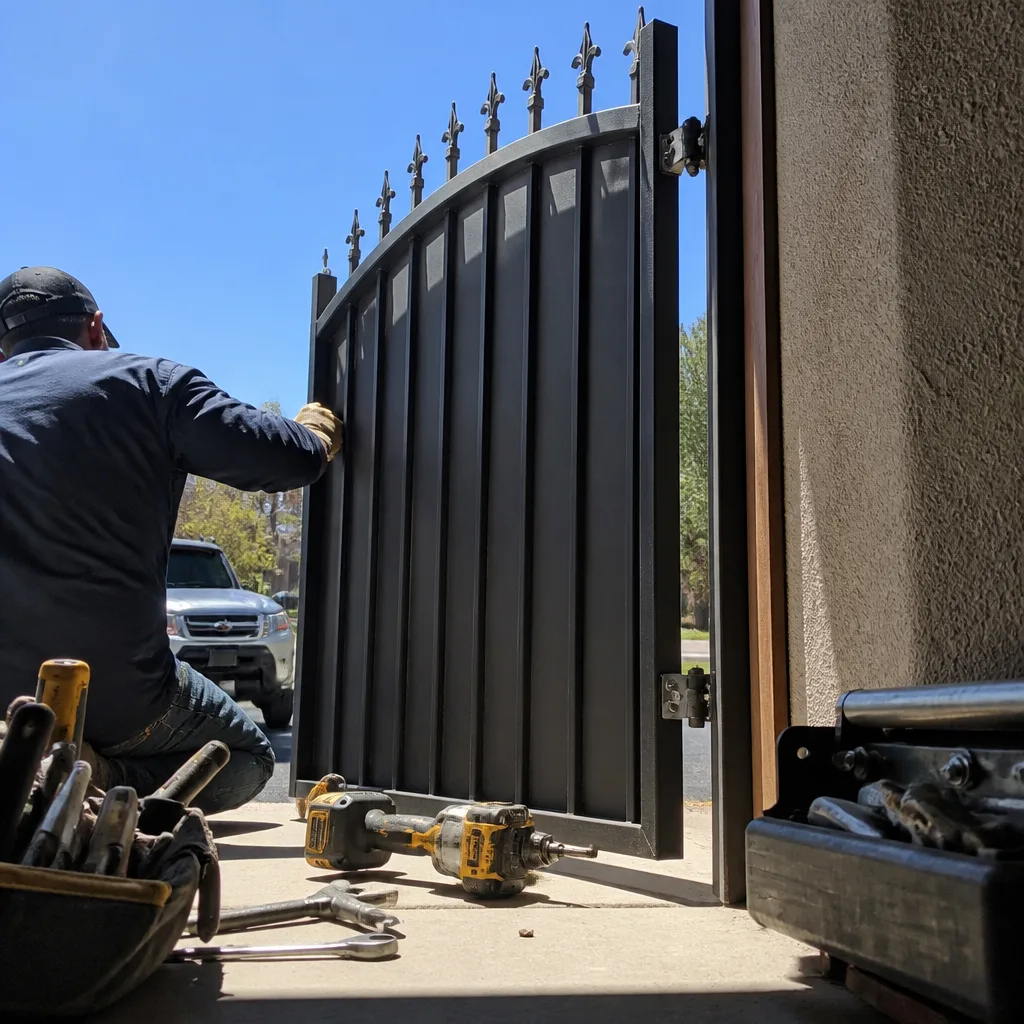
Gate warning signs come in two forms: what you see and what you measure. The homeowners who avoid the most expensive repairs are the ones who record both, recognize repeatability as the threshold from aging to failing, and know the 30-second battery test that prevents a motor misdiagnosis. In Scottsdale’s demanding climate, documentation isn’t obsessive - it’s economical. A measured trend gives a technician more than any description, and a written price before work starts protects you from the invoice shock that defines the rest of the industry. For more guides & resources, explore our blog. Keep a stopwatch and tape measure near your gate. Use them monthly. When the numbers change, call before the behavior becomes a breakdown.
Written by Adrian Vance, Owner at Vance Gate Repair Scottsdale, serving Scottsdale since 2014.