
Last updated September 22, 2026
Free on-site gate assessment - hinges, posts, and your LiftMaster or Nice gate operator checked before anything is quoted
The assessment is free and the quote is the invoice.
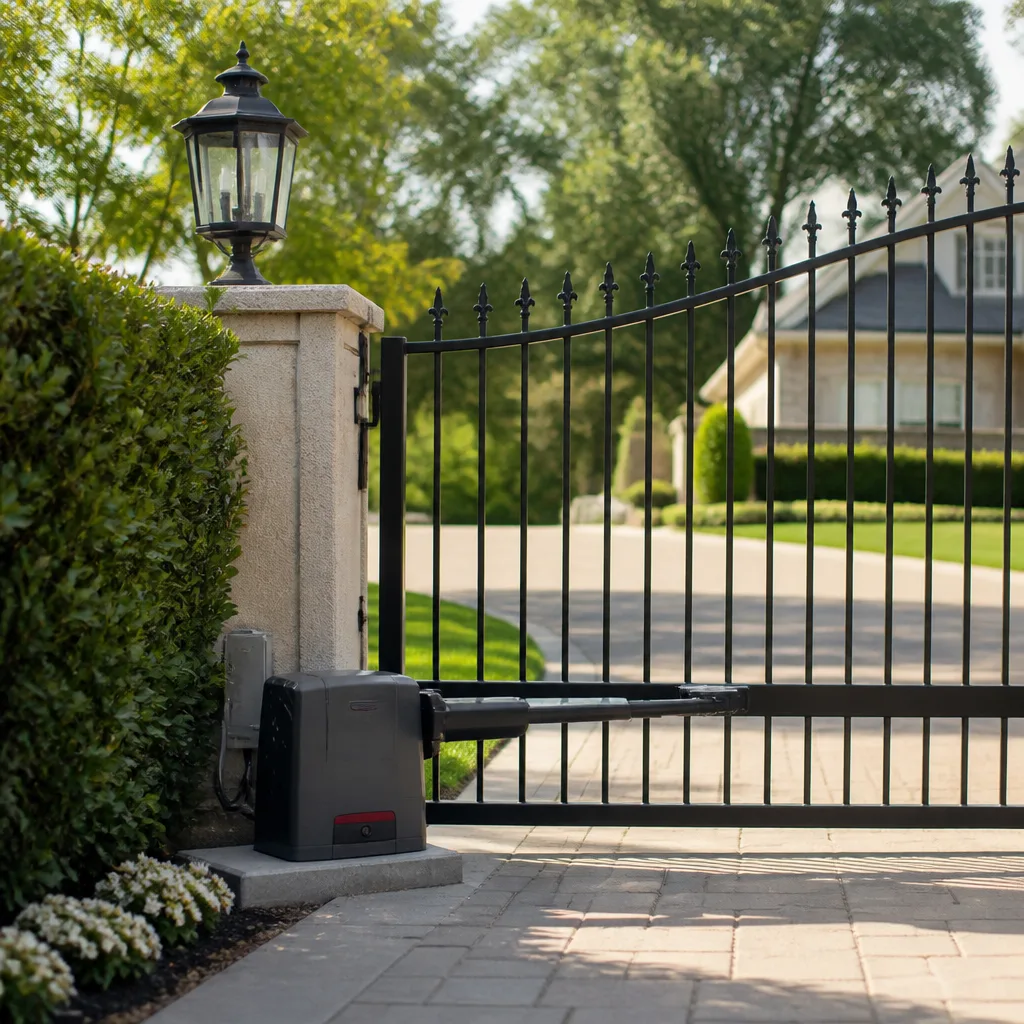
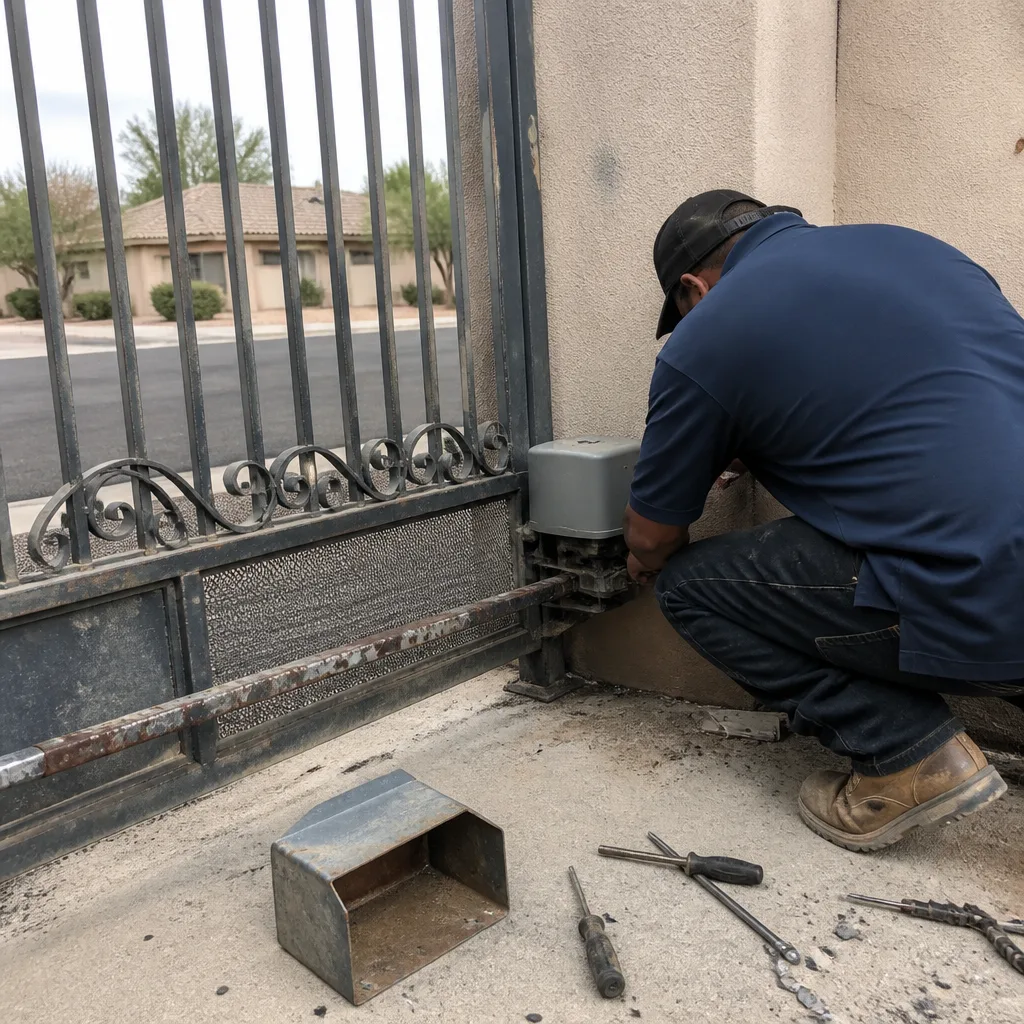 Before
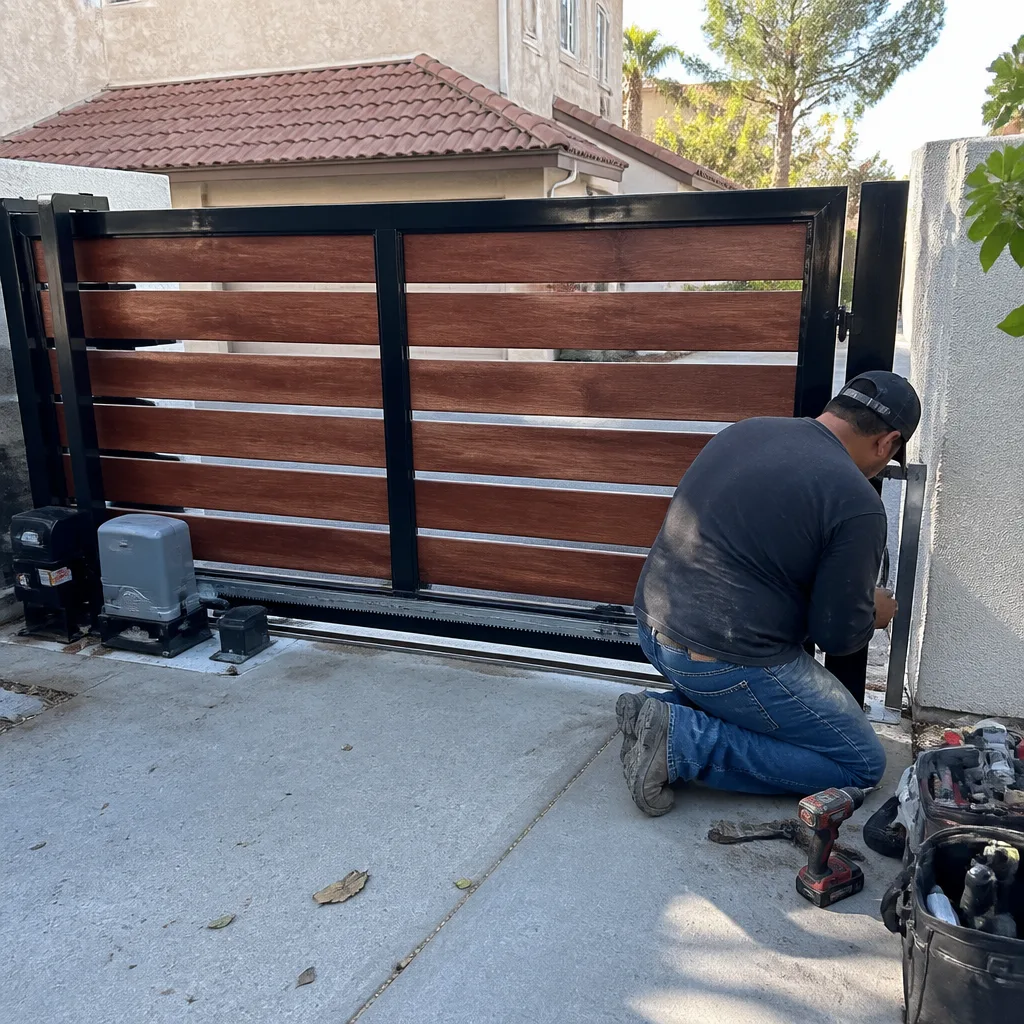 After
After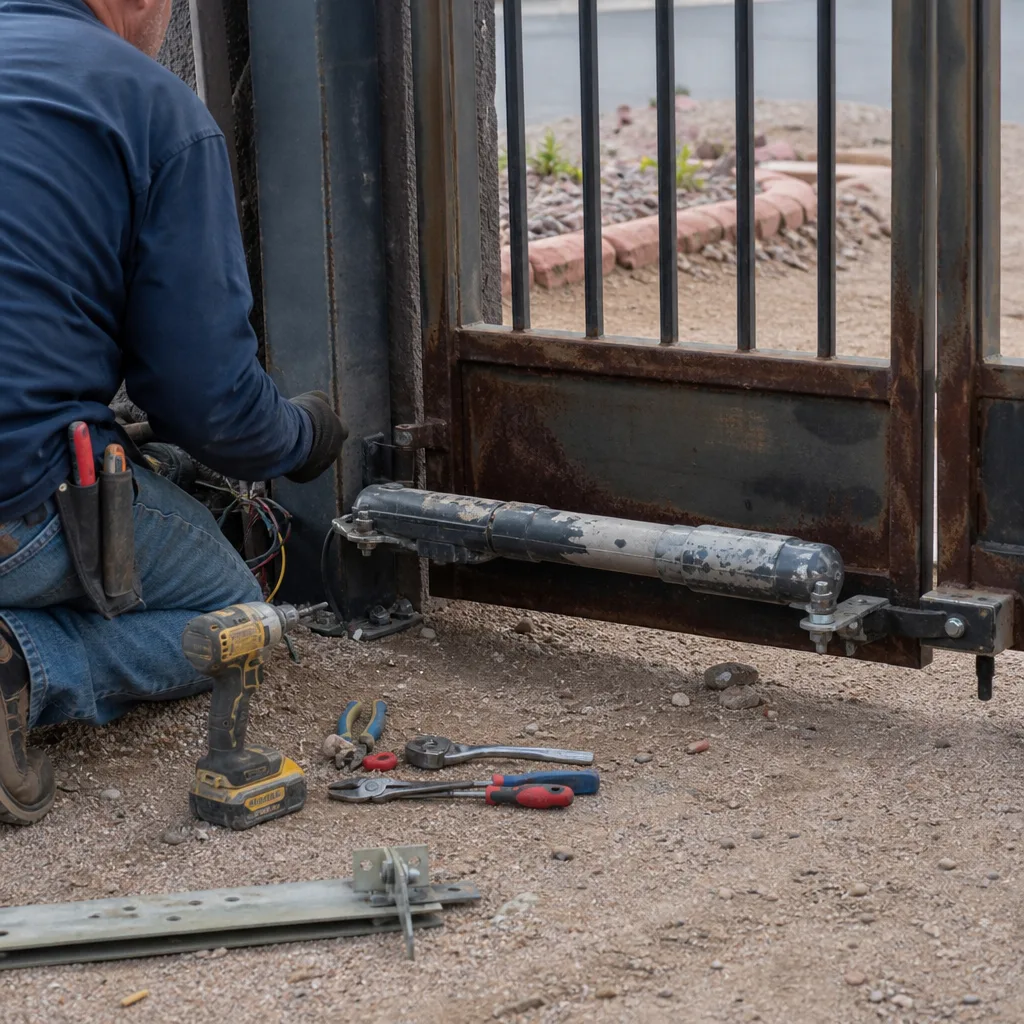 Before
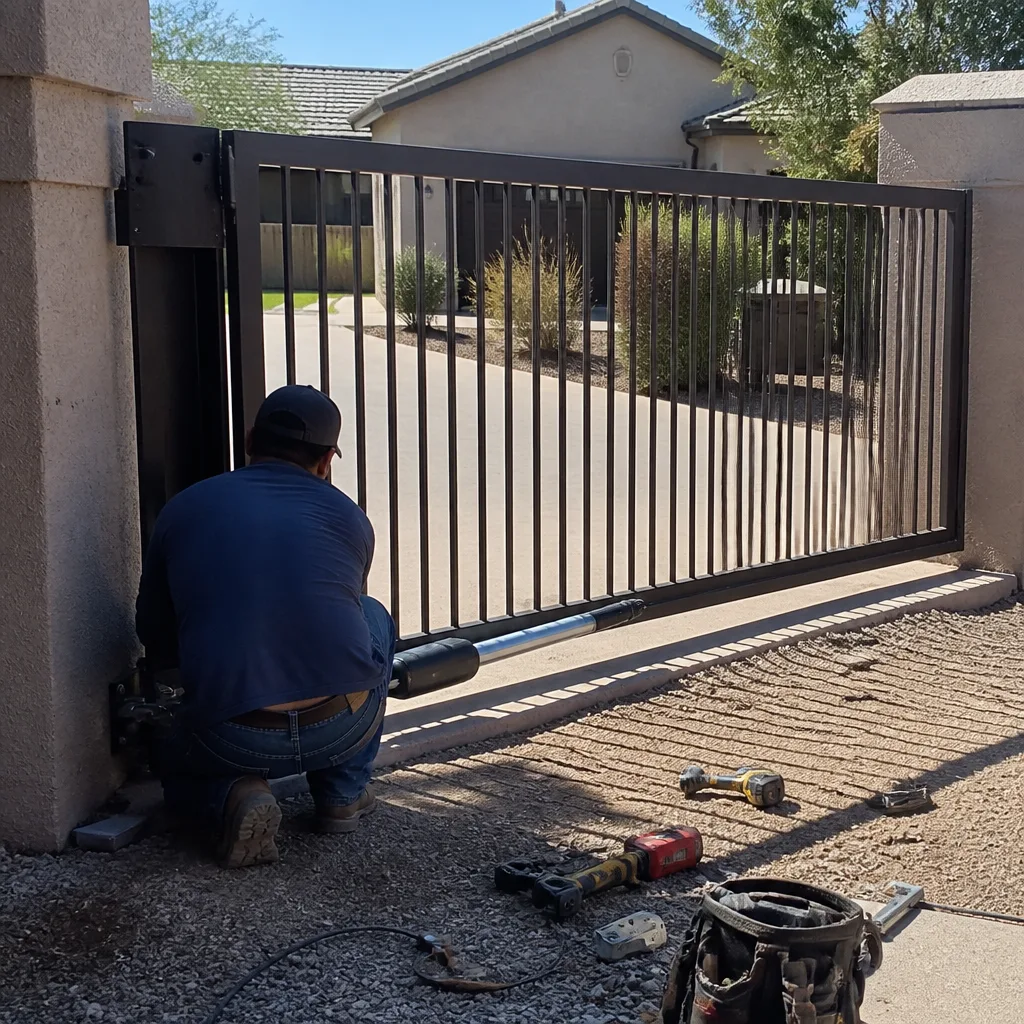 After
After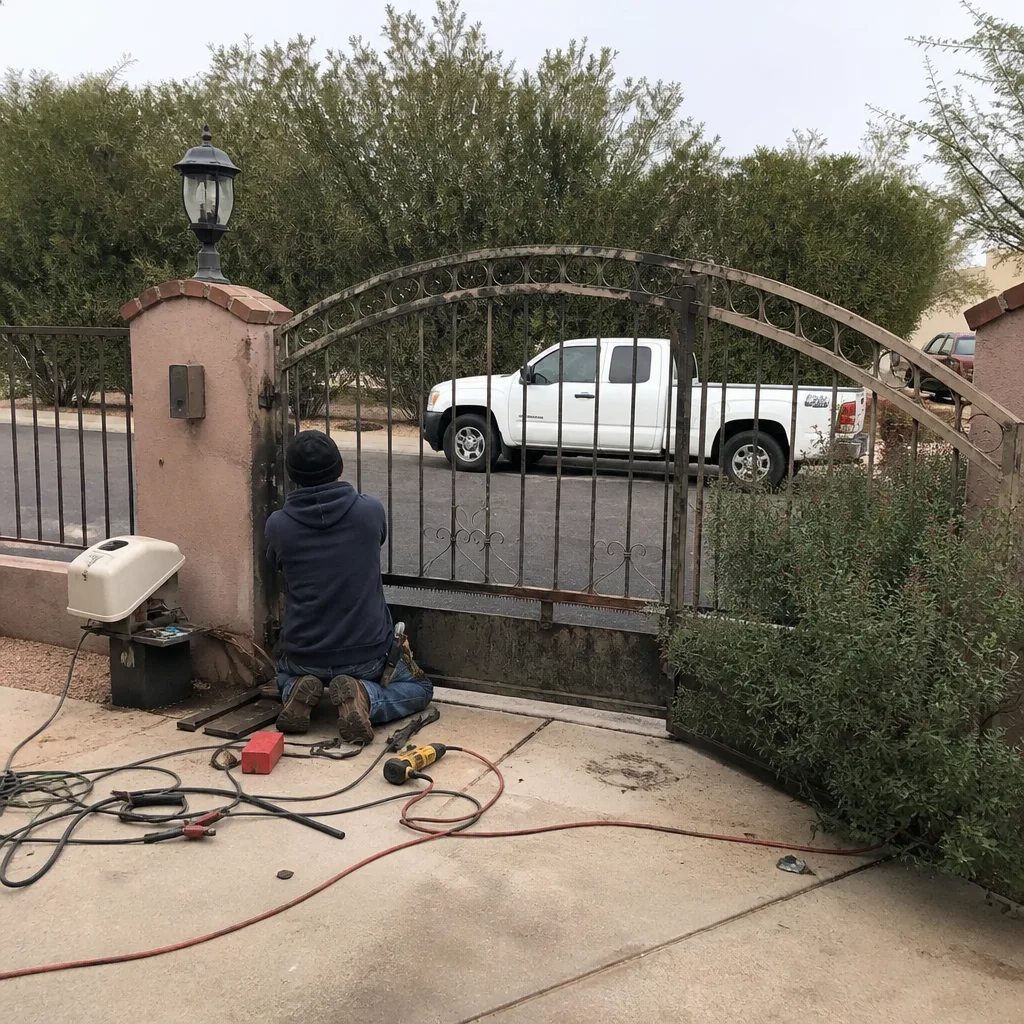 Before
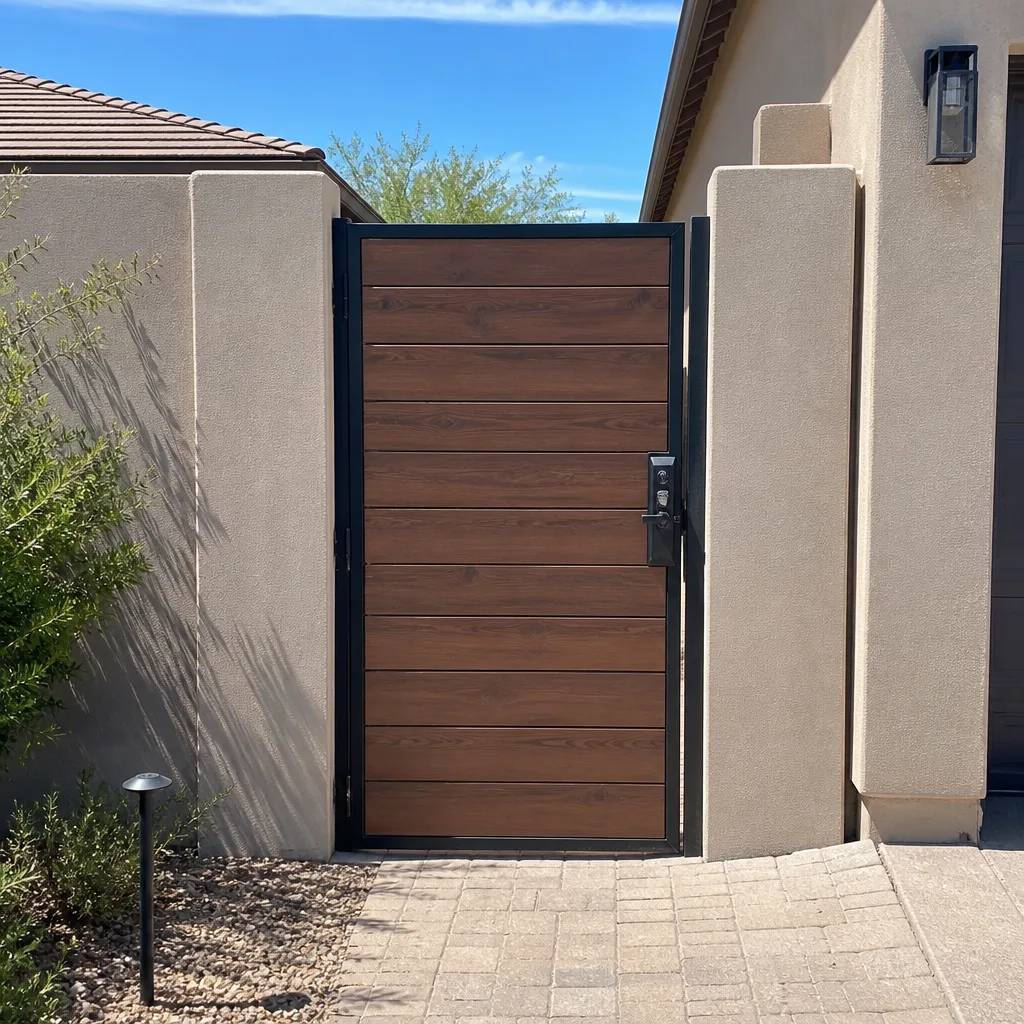 After
AfterGate Repair Permits, Codes & Inspections in AZ: What You Need to Know
Most Arizona homeowners assume gate repairs live in the same permit-free zone as fixing a fence board or replacing a sprinkler head. That’s mostly right, until it isn’t. In Scottsdale, swapping a Ghost Controls operator on your existing driveway gate typically needs no permit at all. But relocate that same gate post six inches to correct a sagging swing, and you may trigger a mechanical permit, an electrical permit, or both. The contractors who know the difference often stay quiet because permitting slows the job. The ones who don’t know the difference cost their customers stop-work orders, failed inspections, and five-figure delays at closing. This guide maps exactly where the line sits, what Scottsdale inspectors actually check, and how to protect yourself whether you’re repairing, replacing, or selling.
Quick Answer
Most residential gate repairs in Arizona require no permit. However, structural modifications to the gate frame or posts, new electrical circuits for operators, and any work that alters the property line or HOA easement typically do require permits and inspections in Scottsdale. When in doubt, the Scottsdale Development Services Department can confirm requirements for your specific address, and reputable contractors will document permit status in writing before starting work. For guidance on vetting contractors, see our step-by-step resource.
Table of Contents
- When Are Permits Required for Gate Work in Scottsdale?
- Mechanical vs. Electrical Permits: Which One Applies?
- HOA CC&Rs vs. City Code: Which Document Controls?
- What a Scottsdale Inspector Actually Checks: The Five Pass/Fail Points
- How Unpermitted Gate Work Surfaces During a Home Sale
- The Documentation You Need When Permitted Work Closes
- Permit Costs and Timeline Ranges in Scottsdale
- Common Mistakes to Avoid
- When to Call a Professional
- Frequently Asked Questions
 Before
 After
AfterWhen Are Permits Required for Gate Work in Scottsdale?
Scottsdale’s Development Services Department draws the permit line based on what changes, not what breaks. Understanding this distinction saves weeks of delay and several hundred dollars in re-inspection fees.
Typically permit-exempt: These repairs fall under routine maintenance in Scottsdale’s administrative code. No application, no inspection, no fee.
- Operator replacement on existing mounting hardware (LiftMaster, Elite, Mighty Mule, or other brands)
- Limit-switch adjustment, photo-eye realignment, or remote programming
- Hinge replacement or lubrication on existing posts
- Control board swap where no new conduit or circuit is pulled
- Welding cracks in the existing gate frame without altering dimensions
Typically permit-required: These changes alter structure, electrical load, or property boundaries.
- Installing a new gate where none existed previously
- Relocating gate posts, even by a few inches
- Replacing a swing gate with a sliding gate (changes footing and track requirements)
- Running new 110V or 220V circuits to power an operator
- Modifying a gate taller than six feet or adding decorative elements that increase wind load
- Any work within a city easement or utility corridor
We’ve seen this confusion cost homeowners directly. In 2019, a Scottsdale homeowner in the McCormick Ranch area replaced a failed DoorKing operator with a new unit, no permit needed. Two years later, the same homeowner hired a different company to widen the driveway gate by fourteen inches to accommodate a new RV. The contractor never pulled a mechanical permit. A neighbor’s complaint triggered a stop-work order. The gate sat half-built for six weeks while the permit application, structural drawings, and re-inspection fees ran just over $2,800. The original operator swap had been fine. The post relocation was not.
The climate factor matters too. Scottsdale’s 115-degree summer days and hard monsoon downpours create specific structural requirements that inspectors enforce. Gate posts set in expansive clay soils without proper depth and drainage specifications can heave during wet seasons. We’ve documented gate posts in Gainey Ranch and DC Ranch that shifted three inches after a single heavy rain because the original installation skipped the 36-inch minimum embedment Scottsdale requires for gates over six feet wide. That installation required a permit. It didn’t have one. The correction involved full removal, re-permitting, and re-inspection.
When we evaluate a job, we classify it in writing: permit-exempt maintenance, permit-required modification, or uncertain pending city confirmation. Under Haven Standard Clause 1, that classification appears on the written scope before any price is set.
Mechanical vs. Electrical Permits: Which One Applies?
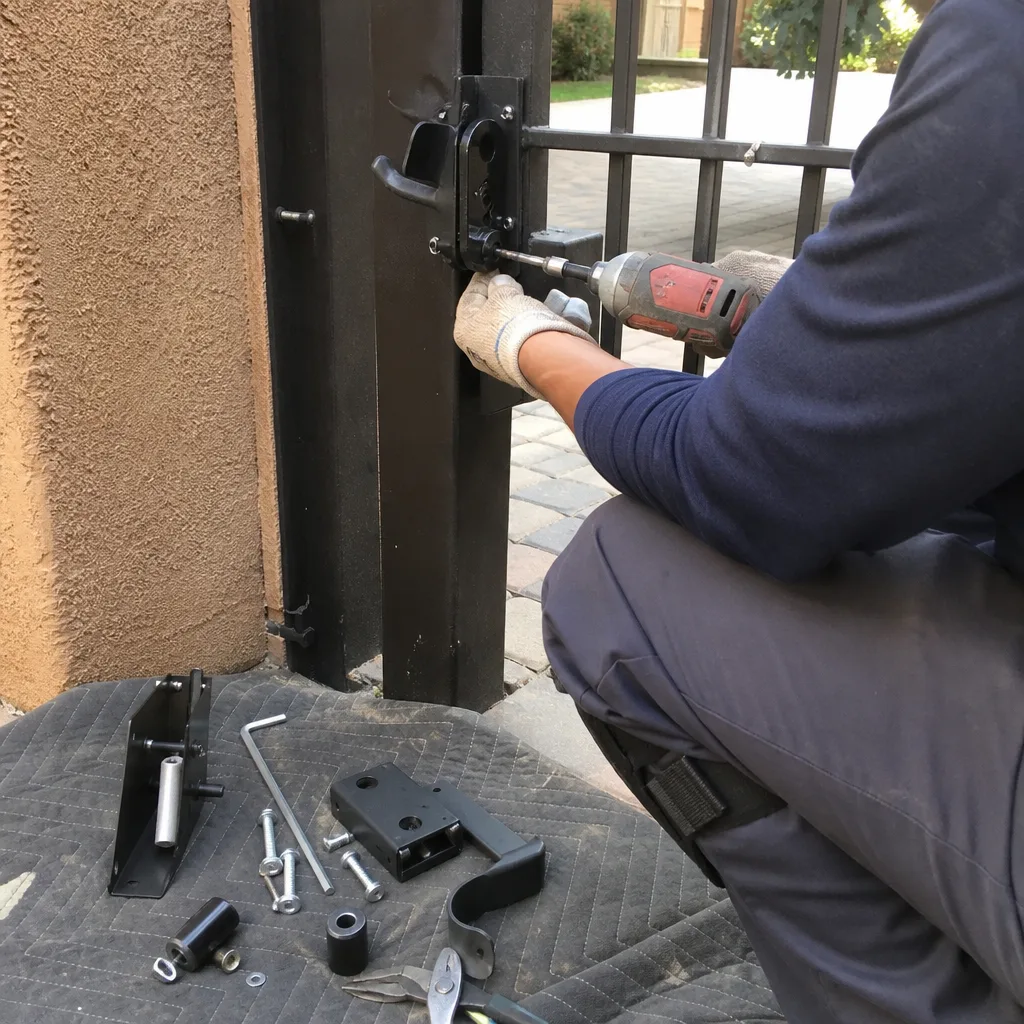
Scottsdale issues separate permits for different trades, and gate work can touch both. Knowing which permit applies prevents the common failure mode of pulling one permit when two were required.
Mechanical permits cover the physical gate structure: posts, frame, hinges, track, wheels, and mounting hardware. Any change to the gate’s dimensions, weight, or structural connection to the property needs this permit. The mechanical inspector checks post depth, concrete footing size, gate clearance from grade, and wind-load resistance.
Electrical permits cover power supply and control systems: new circuits, conduit runs, low-voltage wiring for access control, and operator connections. Even a low-voltage DoorKing keypad running back to a transformer can trigger this permit if new wiring crosses property lines or enters a new conduit path.
Some jobs need both. A new automatic sliding gate on a Paradise Valley Village property we serviced in 2022 required mechanical permitting for the track installation and footing, plus electrical permitting for the 220V circuit to the FAAC operator and the low-voltage loop detector wiring. The homeowner’s initial contractor quoted the job as “no permit needed.” We reviewed the scope during a free second opinion, flagged the dual requirement, and the homeowner avoided what would have been a failed rough-in inspection and $340 re-inspection fee.
The permit application process in Scottsdale runs through the city’s online portal or in-person at Development Services on Indian School Road. Mechanical permits for residential gates typically require:
- A site plan showing gate location relative to property lines and existing structures
- Structural details for posts and footings, including depth and concrete specifications
- Gate dimensions, materials, and estimated weight
- Wind-load calculations for gates over 48 square feet or in designated high-wind zones
Electrical permits require:
- A circuit diagram showing power source, conduit path, and load calculations
- Manufacturer specifications for the operator or control device
- GFCI protection confirmation for any outdoor receptacles
- Compliance with the current adopted NEC cycle (Arizona typically adopts NEC 2020 with state amendments)
Scottsdale’s review timeline runs 5-10 business days for straightforward residential permits. Same-day over-the-counter review is available for simple electrical permits if plans are complete and no corrections are needed. Mechanical permits with structural components rarely qualify for same-day review.
We maintain copies of permit-ready drawings for common gate configurations we install. Under Haven Standard Clause 4, every permitted job we complete includes the permit number, inspection sign-offs, and final as-built photos in the homeowner’s file.
HOA CC&Rs vs. City Code: Which Document Controls?
Scottsdale’s gated communities and master-planned neighborhoods add a second layer of approval that many contractors ignore until the violation notice arrives. Understanding which document controls, and when, prevents mid-project shutdowns.
City code controls safety and structural minimums. Scottsdale’s building code sets the floor: post depth, electrical grounding, clearance requirements, and wind resistance. An HOA cannot approve a gate that violates these standards. If your HOA architectural committee greenlights a twelve-foot gate on six-inch posts, the city inspector will still fail it.
HOA CC&Rs control aesthetics, materials, and placement. Your HOA can require specific colors, prohibit certain materials, mandate setback distances beyond city minimums, or ban visible operators and control boxes from street view. The city does not enforce these rules, but the HOA can fine, lien, or force removal.
When they conflict, city code wins on safety; CC&Rs win on everything else. We’ve worked with homeowners in Troon North whose HOA required natural rust-finish steel gates that conflicted with Scottsdale’s corrosion-resistance standards for coastal-exposure ratings. The compromise: powder-coated steel in a rust-tone finish that satisfied both. The homeowner who assumed HOA approval meant city approval would have faced a failed inspection.
Key HOA requirements we see regularly in Scottsdale communities:
- McDowell Mountain Ranch: Gates visible from common areas must match approved color palettes; operator housings require landscape screening
- DC Ranch: Automated gates require HOA pre-approval of operator location and access control type; keypads must use community-standard codes
- Gainey Ranch: Gate height limited to six feet on street-facing properties regardless of city allowance for seven feet with grade adjustment
- Silverleaf: Wrought iron or steel required; aluminum and composite materials prohibited regardless of structural adequacy
The practical sequence matters. For permitted work, city approval comes first, then HOA architectural review. For permit-exempt repairs, HOA notification requirements vary. Some CC&Rs require pre-approval for any visible change; others only for structural modifications. We’ve seen homeowners in Pinnacle Peak assume their operator replacement was HOA-exempt because no permit was required, then receive a compliance notice because the new Mighty Mule housing was visible above the wall line and the CC&Rs required screening for any new equipment.
We review CC&Rs as part of our written scope when HOA jurisdiction applies. Under Haven Standard Clause 1, we note any HOA approval requirement alongside the price, so the homeowner knows the full timeline before work starts.
What a Scottsdale Inspector Actually Checks: The Five Pass/Fail Points
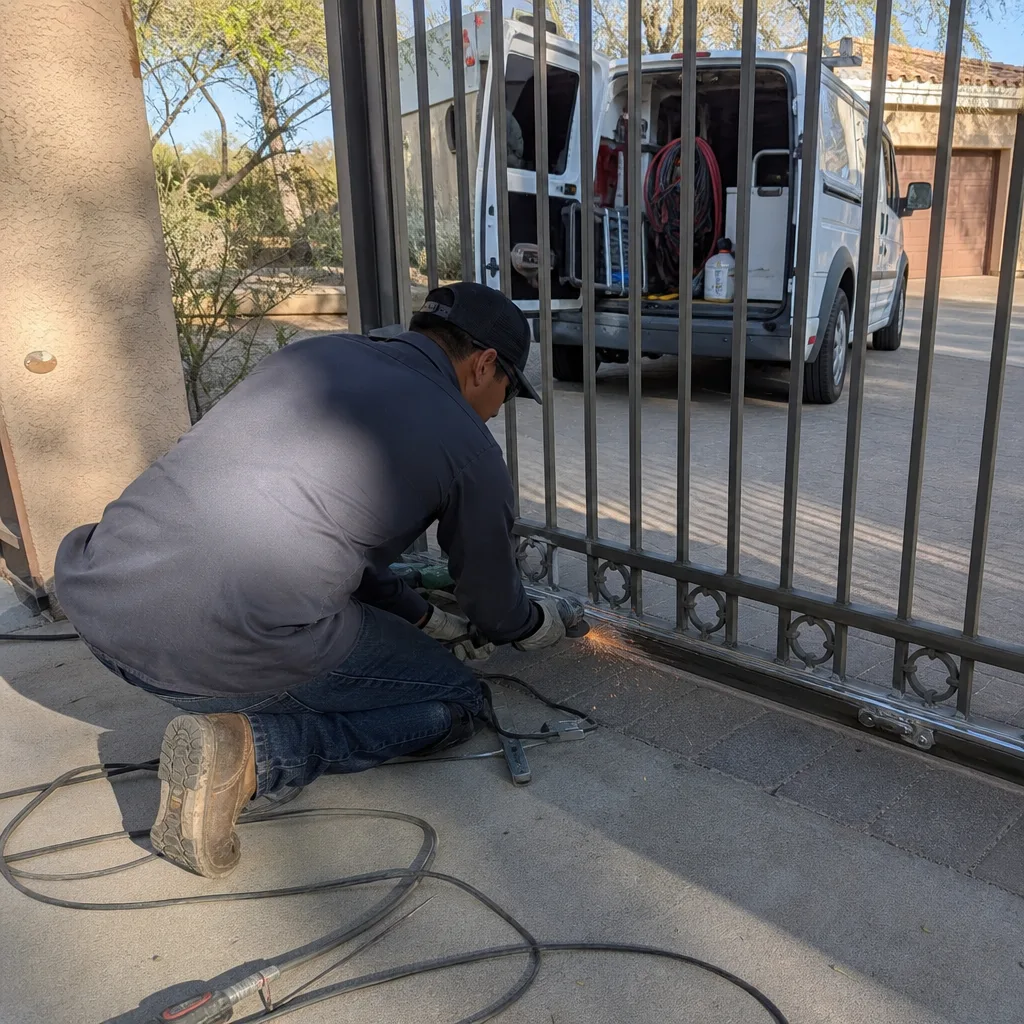
Homeowners often imagine inspections as arbitrary ordeals. In our experience across hundreds of permitted gate installations and repairs in Scottsdale, inspectors follow a consistent checklist. Knowing the five pass/fail points lets you verify your contractor’s work before the inspector arrives, avoiding the $150-$340 re-inspection fee Scottsdale charges for each return visit. Browse our more guides & resources for additional Scottsdale-specific home maintenance help.
1. Post embedment and footing
The inspector measures post depth with a probe or requests excavation exposure. Scottsdale requires 36-inch minimum embedment for single swing gates under six feet wide, 42 inches for wider gates or double swing configurations, and 48 inches for sliding gate track posts. The concrete footing must be minimum 12 inches diameter for residential posts, or match engineered specifications for larger gates. We’ve corrected installations in Desert Mountain where contractors used 24-inch embedment to save time. The inspector failed them on the first visit. The fix required full removal and re-pour.
2. Gate clearance and safety gaps
The gate must maintain 2-inch minimum clearance from grade at its lowest point, measured with the gate fully closed. This prevents trapping and allows drainage. The inspector also checks pinch points at hinges and between gate and post, requiring guards or minimum 0.5-inch gaps. For automated gates, the photo-eye (the infrared beam that stops the gate if something crosses the path) must be installed at 6 inches and 24 inches above grade for residential applications, or per manufacturer specification if more restrictive.
3. Electrical grounding and GFCI protection
Every operator circuit requires proper equipment grounding conductor, and any outdoor receptacle within 20 feet of the gate must be GFCI-protected. The inspector tests with a plug-in tester. We’ve found failed grounds in older Scottsdale homes where aluminum wiring was spliced to copper without proper connectors, a condition that also creates fire risk. Our documentation includes the ground impedance reading when we test it.
4. Wind load and structural connection
For gates over 48 square feet or in Scottsdale’s designated wind exposure zones, the inspector verifies that the gate frame and mounting hardware match the engineered wind-load rating. This typically means 90 mph design wind speed for Scottsdale’s inland location. Decorative additions like scrollwork or solid infill panels can increase wind load beyond the original design. We’ve added reinforcement to existing gates where homeowners installed metal art panels that turned a 70 mph-rated gate into a sail.
5. Access control and entrapment protection
Automated gates must have at least two independent entrapment protection devices. Common combinations include photo-eyes plus edge sensors, or photo-eyes plus inherent force limitation (built into operators like some Elite models with adjustable obstruction sensitivity). The inspector tests each device by interrupting the beam or applying calibrated resistance. The gate must reverse within 2 seconds or within 2 inches of travel, depending on the protection type. We document the force-lbs reading or reversal time for each device under Haven Standard Clause 4.
Scottsdale inspectors typically schedule 30-minute windows for residential gate inspections. The contractor or homeowner must be present to operate the gate and provide access to electrical panels. Failed items receive a correction notice with specific code references. Re-inspection requires online scheduling, with current availability typically 3-5 business days out.
How Unpermitted Gate Work Surfaces During a Home Sale
The moment unpermitted work becomes expensive is rarely during the work itself. It’s during escrow, when the buyer’s inspector, the title company’s records search, or the city’s voluntary compliance review flags the discrepancy. In Scottsdale’s active resale market, this happens more often than homeowners expect.
How it surfaces:
- Buyer home inspectors photograph gate structures and note permit status in their reports; experienced Scottsdale inspectors know to check
- Title companies in Arizona increasingly run permit-history searches as part of their due diligence, particularly for properties with recent improvements
- City compliance officers can issue notices based on satellite imagery changes or neighbor complaints, regardless of sale timing
- Insurance underwriters may request permit documentation for automated gates with liability exposure
What remediation costs:
The cost to retroactively permit work typically exceeds the original permit fee by 3-5x. Scottsdale requires opening covered work for inspection, which means removing stucco or siding around posts, exposing electrical connections, or trenching to verify conduit depth. We’ve assisted homeowners with retroactive permitting where the original contractor was unlicensed or unresponsive. A 2023 case in North Scottsdale involved a sliding gate installed in 2020 without permits. The remediation required: $1,200 for structural engineer review of post footings, $800 for electrical permit and inspection, $2,400 for excavation and re-inspection exposure, plus $600 in city penalties. The original permit would have cost $340.
The disclosure problem:
Arizona’s seller disclosure statement (SPDS) specifically asks about permits for structural modifications. A “don’t know” answer on a visible gate installation invites buyer scrutiny. A “no” answer on permitted work requires explanation. We’ve had sellers call us to produce documentation for work we completed years prior, which we can do because every job under The Haven Standard includes a permanent file with permit numbers, inspection dates, and photo records.
Scottsdale’s market moves fast, but permit history moves slowly. A gate installed without permits in 2019 can derail a 2026 closing. The documentation we leave with homeowners, permit or no permit, creates a paper trail that protects resale value.
The Documentation You Need When Permitted Work Closes
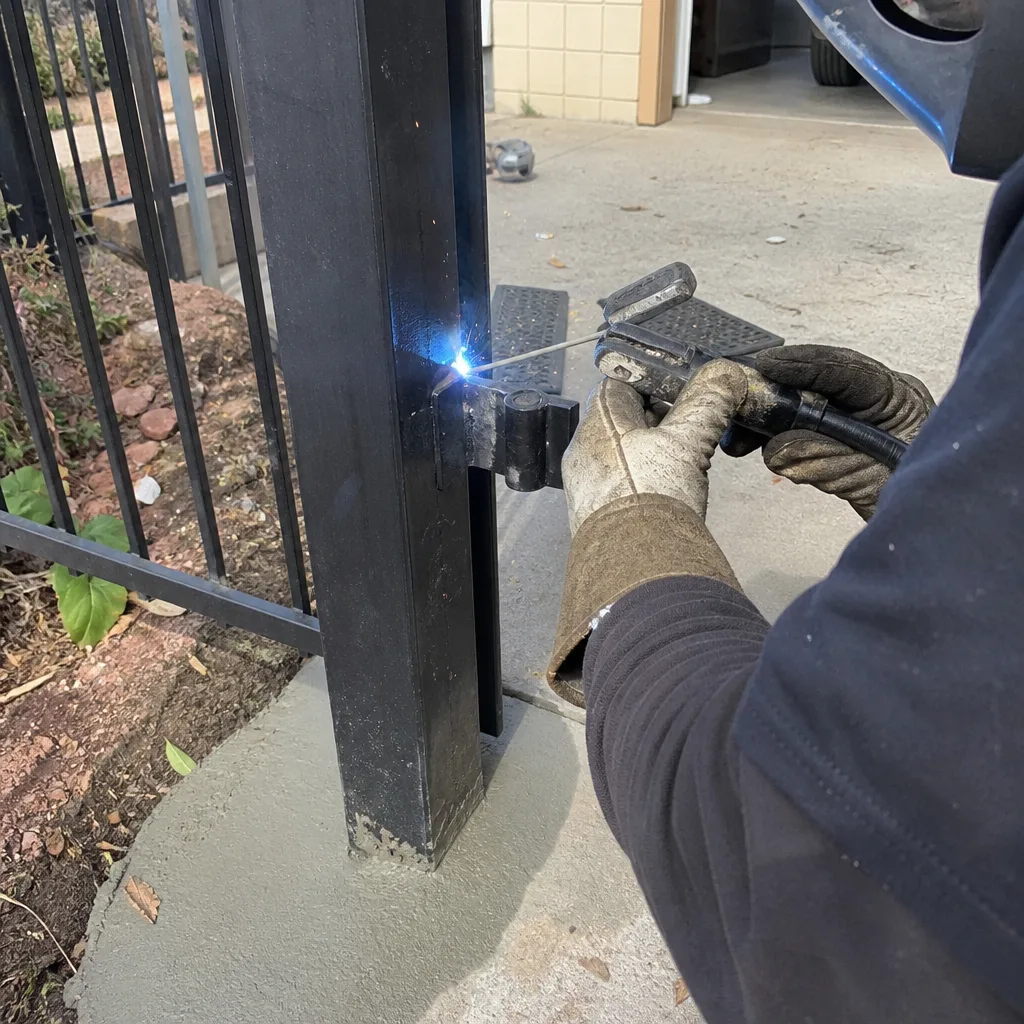
Permitted work isn’t complete when the contractor packs up. It’s complete when the permit is finaled, the inspection records are accessible, and the homeowner has copies in their files. We’ve seen too many Scottsdale homeowners left with nothing but a handshake and a vague memory of “it passed inspection.”
The minimum documentation set:
- Permit application copy - shows the scope as approved by the city, including any plan corrections or approved amendments
- Inspection record - Scottsdale provides online access, but homeowners should request a printed or PDF summary showing each inspection type (rough-in, final, etc.), date, inspector name, and pass/fail status
- Final permit sign-off or “green tag” - the physical or digital confirmation that the permit is closed and no further inspections are required
- As-built drawings or photos - showing what was actually installed versus what was originally planned; critical for any future repair or modification
- Contractor’s final invoice with scope detail - itemizing labor, materials, and any change orders, matched to the permit scope
Why this matters for future work: We’ve serviced gates in Scottsdale where the original installer used a non-standard post spacing that subsequent contractors couldn’t diagnose without excavation. Our photo record from a 2018 job in McCormick Ranch showed a custom bracket solution that saved a 2024 repair technician two hours of troubleshooting. The homeowner had kept the documentation we provided. Without it, the technician would have assumed a standard installation and likely misdiagnosed the problem.
For permit-exempt work, we provide a different but equally specific document set: the written scope and price from Haven Standard Clause 1, a photo log of conditions found and work performed under Clause 4, and a statement of permit status. This creates a clear record that the work was classified as maintenance, not modification, should any question arise later.
We file copies of all documentation in our job records indefinitely. Homeowners who lose their paperwork can request duplicates at any time. This is part of the 365-Day Done Right Promise and extends beyond the promise period for document retrieval.
Permit Costs and Timeline Ranges in Scottsdale
Understanding the financial and time commitment of permitting helps homeowners evaluate contractor quotes that include or exclude this step. Scottsdale’s fee structure is public, but the total cost includes more than the city fee.
| Permit Type | City Base Fee | Plan Review Fee | Typical Total with Contractor Coordination | Timeline |
|---|---|---|---|---|
| Mechanical permit, residential gate (simple) | $85-$120 | $45-$65 | $280-$450 | 5-10 business days review + inspection scheduling |
| Mechanical permit, residential gate (structural/engineered) | $120-$180 | $85-$120 | $450-$750 | 10-15 business days review + inspection scheduling |
| Electrical permit, new circuit to operator | $65-$95 | $35-$50 | $180-$320 | Same-day to 3 business days review |
| Combined mechanical + electrical | $150-$275 | $120-$185 | $630-$1,100 | 10-15 business days review + sequential inspections |
| Re-inspection fee (per return visit) | $150-$340 | N/A | $150-$340 | 3-5 business days rescheduling |
| Retroactive permit (penalty + exposure work) | 2x base fee + penalties | Full plan review | $2,000-$5,000+ | 4-8 weeks typical |
These ranges reflect Scottsdale’s current fee schedule and our experience coordinating permits for gate work. Contractor coordination fees vary; some builders include permit handling in their base price, others itemize it. Under Haven Standard Clause 1, we itemize permit costs separately when they apply, so the homeowner sees exactly what the city charges versus what we charge for plan preparation and inspection attendance.
Timeline factors specific to Scottsdale include monsoon season inspection backlogs (July-September typically adds 2-3 days to scheduling), and year-end volume surges when homeowners rush to complete work before tax planning deadlines. We’ve also found that permits for properties in floodplain or hillside zones, including parts of Troon and Desert Mountain, require additional environmental review that can add 5-10 business days.
For permit-exempt maintenance work, the timeline is simply our standard scheduling: typically 24-48 hours for non-emergency repairs in Scottsdale, with the written price delivered before we arrive and the photo record delivered before we leave.
Common Mistakes to Avoid
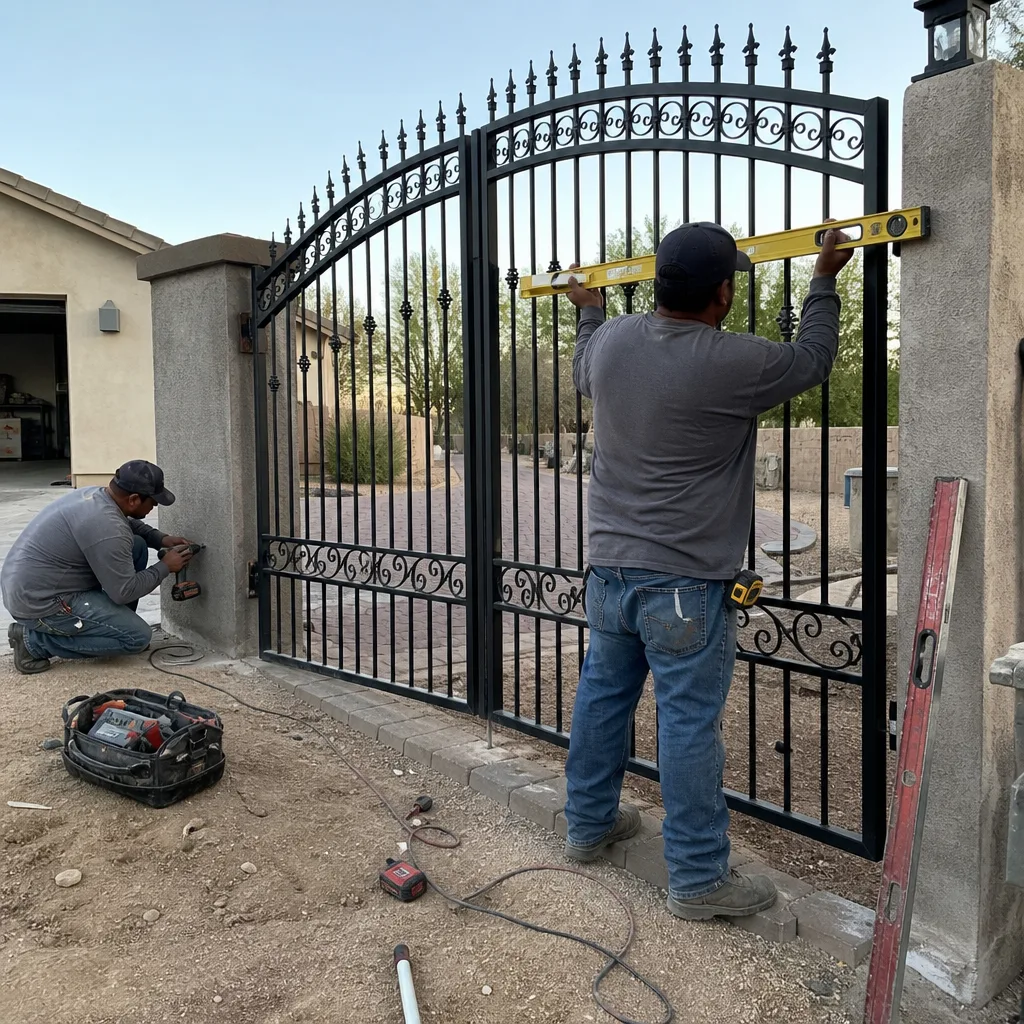
- Assuming operator replacement is always permit-exempt. If the new operator requires a new circuit, larger conduit, or different mounting that modifies the post, the exemption may not apply. We classify this in writing before quoting.
- Accepting verbal assurance that “we never pull permits for this.” Scottsdale’s enforcement is complaint-driven, which means the absence of past consequences doesn’t predict future ones. A neighbor’s complaint or home sale can trigger review years later.
- Starting HOA architectural review after city permit approval. Some HOAs require their approval before city permit application. Reversing this sequence can invalidate the permit timeline if the HOA demands design changes.
- Discarding inspection documentation after closing. We’ve had Scottsdale homeowners call us fifteen years after installation to verify permit status for insurance claims. The city’s online records don’t always extend that far. Keep physical or cloud-stored copies.
- Hiring unlicensed contractors for permitted work. Scottsdale requires licensed contractors to pull permits. Homeowner-permitted work is allowed in limited circumstances but creates liability exposure and often voids manufacturer warranties on operators.
- Ignoring wind-load requirements for solid-panel gates. Scottsdale’s 90 mph design standard applies regardless of gate style. A solid aluminum gate catches more wind than an open wrought-iron design and may require heavier posts and deeper footings than the original specification.
When to Call a Professional
Call a licensed gate contractor when your project involves structural changes, new electrical circuits, or any uncertainty about permit status. The cost of professional classification is minimal compared to stop-work orders, failed inspections, or retroactive permitting. Gate Repair in Scottsdale from Vance Gate Repair Scottsdale includes written permit classification on every scope, and we offer free second opinions on any written estimate from another company. If you’ve received a quote that doesn’t address permits, bring it to us and we’ll review the scope against Scottsdale’s current requirements at no charge. For any gate project in Scottsdale, call (928) 363-3921. A live person answers 24 hours a day.
Frequently Asked Questions
Typically no, if the replacement uses existing mounting hardware and electrical connections without modifying the circuit or structure. If the new motor requires a larger power supply, new conduit, or different post mounting, an electrical or mechanical permit may apply. We classify this in writing before any work starts under Haven Standard Clause 1. Call (928) 363-3921 for a free estimate with permit status confirmed.
Simple mechanical permits run $280-$450 total including city fees and contractor coordination; electrical permits for new circuits run $180-$320; combined permits for new installations typically range $630-$1,100. Retroactive permits for unpermitted work cost significantly more due to penalties and exposure requirements. We itemize all permit costs separately in our written quotes.
Yes, on aesthetic, material, and placement requirements that exceed city minimums. City code controls safety; CC&Rs control appearance. Both must be satisfied. We review applicable CC&Rs and note HOA requirements in our written scope before quoting.
The work may surface during buyer inspection, title review, or insurance underwriting. Remediation typically costs 3-5 times the original permit fee, plus exposure work to open covered components for inspection. We provide permanent documentation for all work, permit or exempt, to protect future resale.
Simple electrical permits often receive same-day or next-day review; mechanical permits with structural components take 5-10 business days; engineered or hillside-zone permits may take 10-15 business days. Monsoon season and year-end surges add 2-3 days typically.
The permit application copy, inspection record with pass/fail status, final sign-off confirmation, as-built photos or drawings, and detailed contractor invoice. Under Haven Standard Clause 4, we provide all of these plus our documented photo record of actual conditions and adjustments. Call (928) 363-3921 to request copies from any past job.
The Bottom Line
Most gate repairs in Scottsdale need no permit, but the exceptions carry real consequences. Structural modifications, new electrical circuits, and work that alters dimensions or property lines typically require mechanical or electrical permits with city inspection. HOA CC&Rs add a second approval layer that contractors ignore at their customer’s risk. The five-point inspection checklist, permit cost ranges, and documentation requirements in this guide give homeowners the specific knowledge to verify contractor claims and protect resale value. The cheapest path is almost always doing it correctly the first time, with written documentation that survives the next decade. That’s the standard we apply on every job, permit or not.
Written by Adrian Vance, Owner at Vance Gate Repair Scottsdale, serving Scottsdale since 2014.