
Last updated September 22, 2026
Free on-site gate assessment - hinges, posts, and your LiftMaster or Nice gate operator checked before anything is quoted
The assessment is free and the quote is the invoice.


 Before
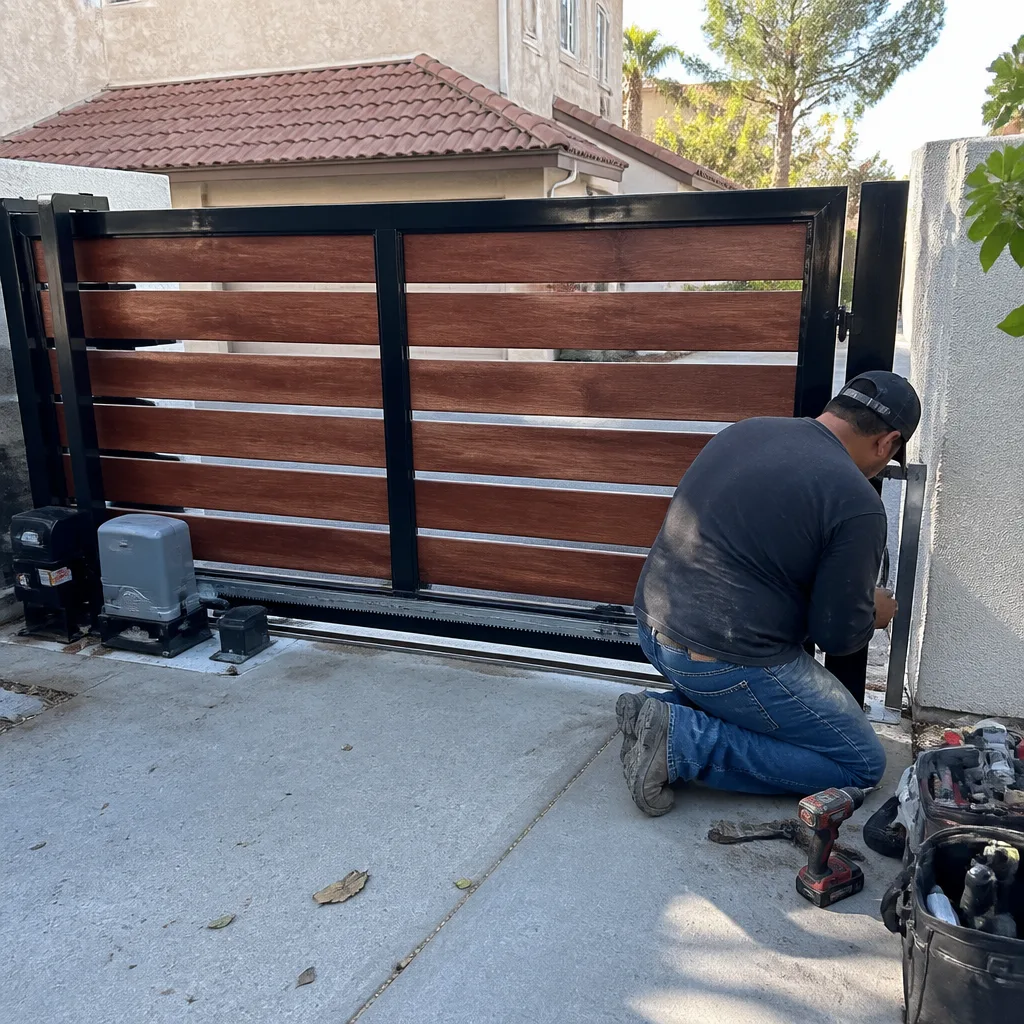 After
After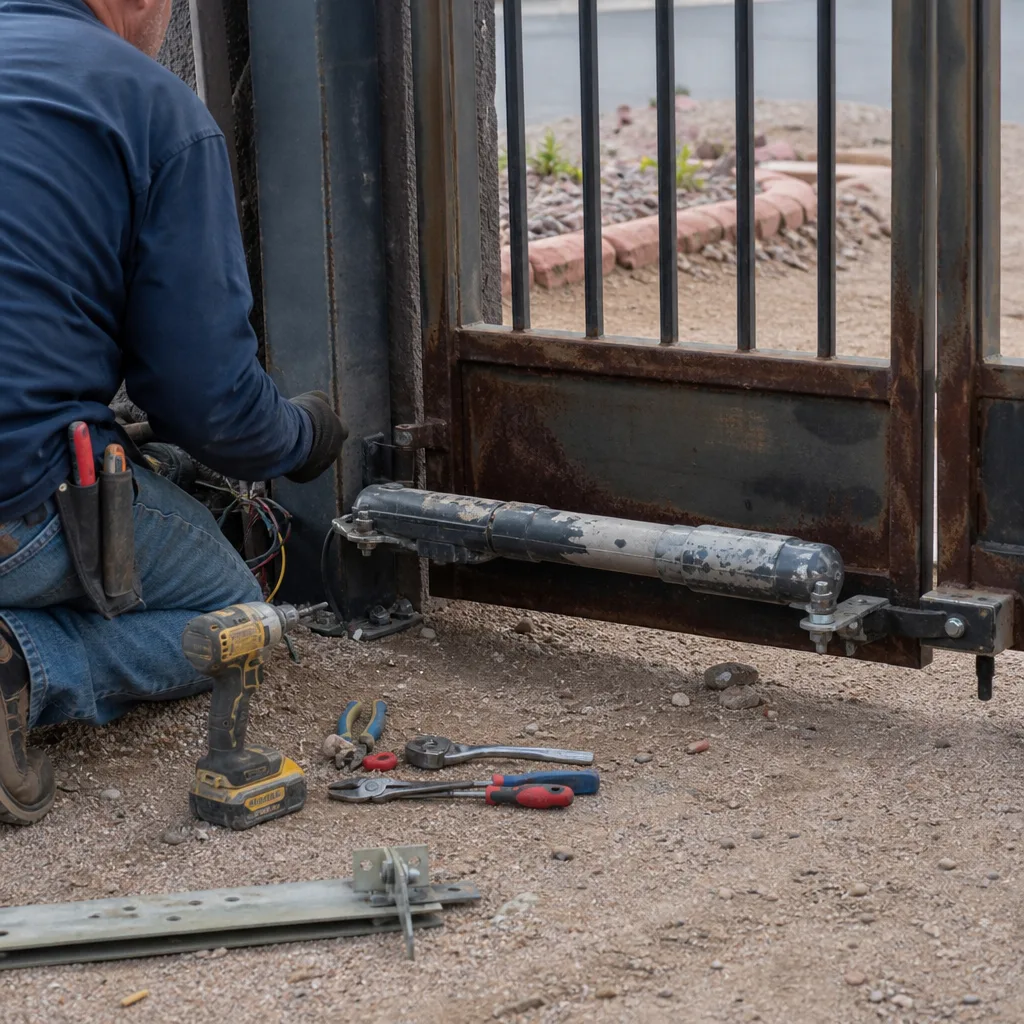 Before
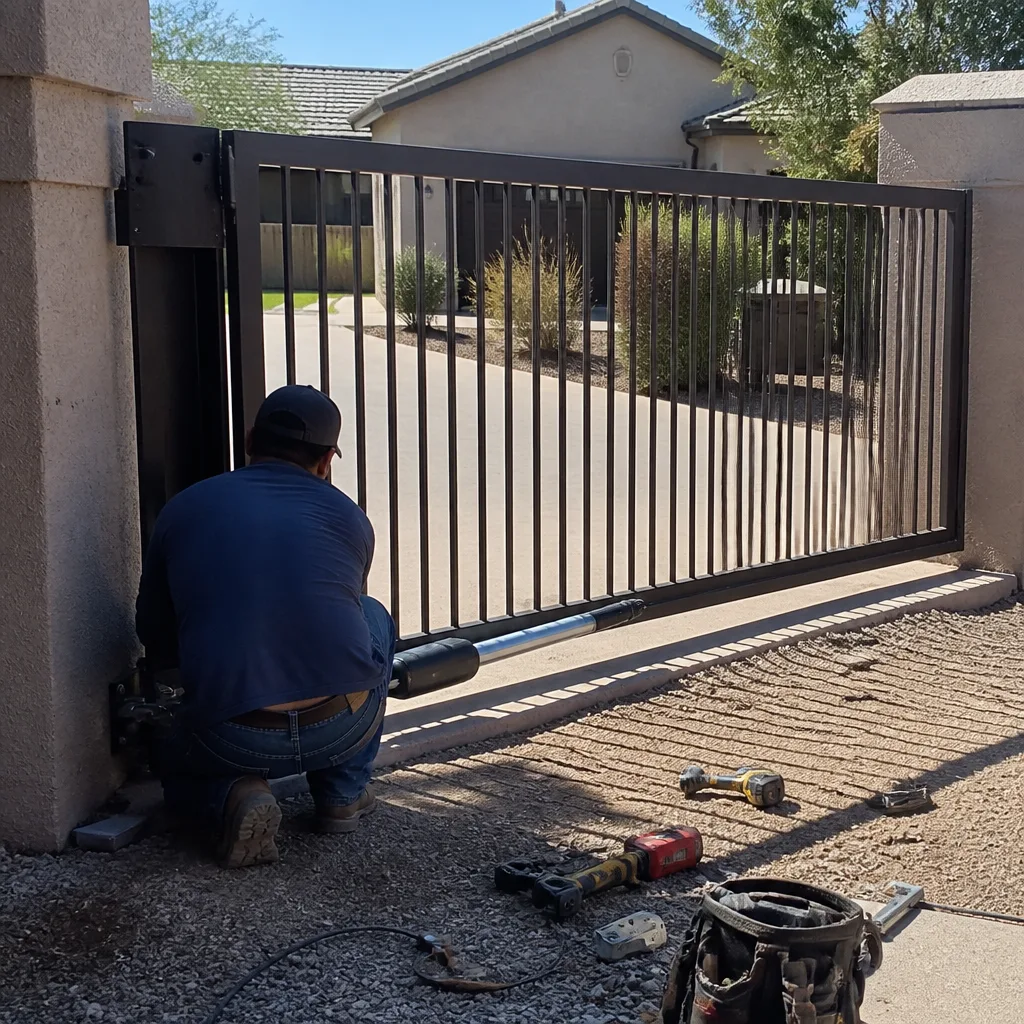 After
After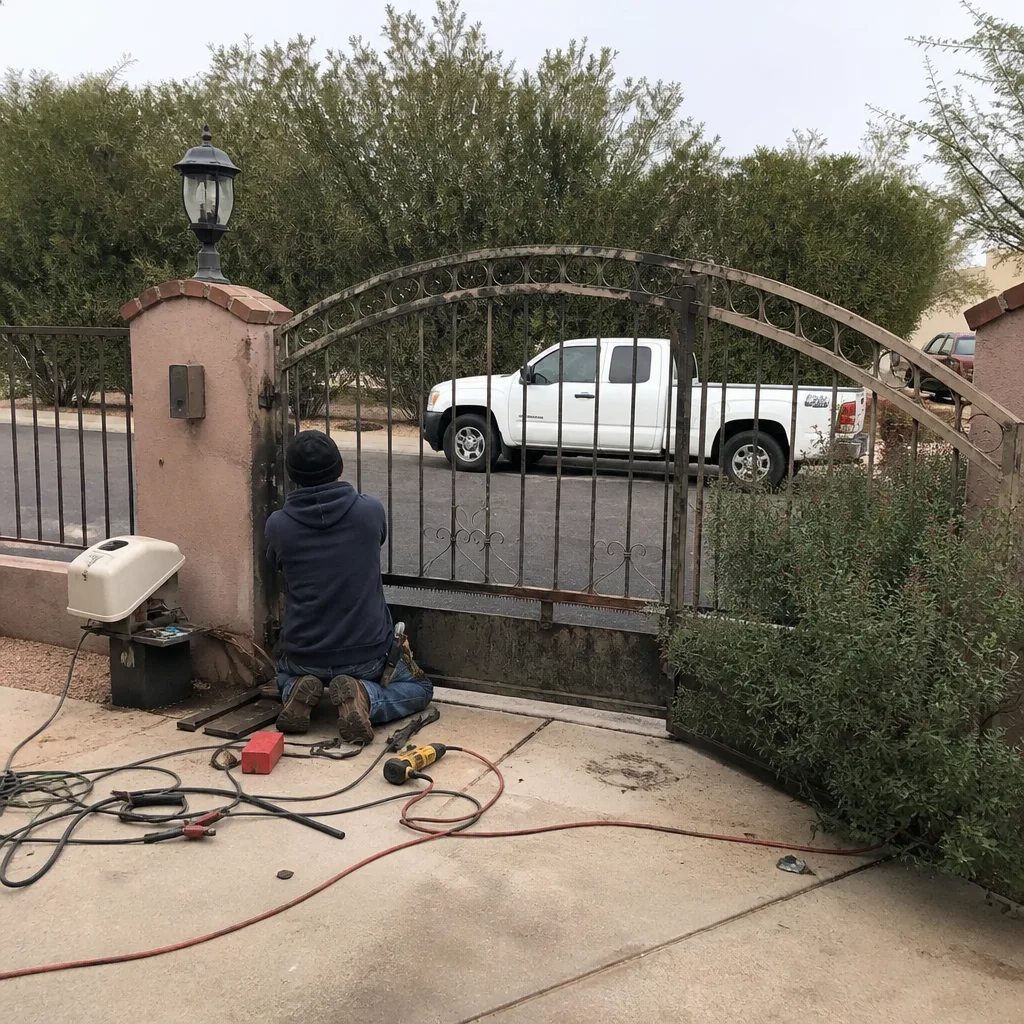 Before
 After
AfterDIY vs Professional Gate Repair: The Scottsdale Homeowner’s Decision Guide
Replacing a gate’s safety loop detector yourself is a $60 part swap with a YouTube tutorial. Doing it incorrectly in a high-voltage conduit run with aluminum wiring - common in Scottsdale homes built before 1985 - is a fire risk that a homeowner’s insurance policy may not cover. In our experience across Paradise Valley, McCormick Ranch, and Old Town Scottsdale, the DIY-versus-professional decision for gate repair isn’t about skill level. It’s about where in the failure chain the problem sits. Mechanical hardware is frequently owner-serviceable. Control board and wiring faults in Arizona’s heat carry safety and code consequences that change the calculus entirely. This guide breaks down exactly which repairs belong in which column, what Arizona’s contractor laws mean for your liability, and how to document any work you do attempt so the next technician doesn’t charge you to rediscover what you already found.
Quick Answer
Most Scottsdale homeowners can safely handle mechanical gate repairs like lubricating hinges, clearing track debris, or replacing a remote battery. Electrical repairs involving control boards, 120V power runs, or safety sensor wiring should be left to a licensed contractor due to fire risk, ROC compliance requirements, and insurance implications. If the repair requires a tool you don’t already own, the job probably belongs on the professional side of the line.
Table of Contents
- The Repair-Type Matrix: Mechanical vs. Electrical vs. Structural
- What Arizona’s ROC Statute Means for Gate Repairs
- The True Cost of a DIY Attempt Gone Wrong
- Owner-Serviceable Repairs: A Step-by-Step Guide
- Repairs That Require a Professional
- How to Document a DIY Repair Properly
- What a Professional Provides That YouTube Cannot
- How Scottsdale’s Climate Affects Gate Components
 Before
 After
AfterThe Repair-Type Matrix: Mechanical vs. Electrical vs. Structural
Gate failures sort into three categories, and the category determines who should handle the repair. We’ve built this matrix from 22,000+ gate visits since 2014, including thousands in Scottsdale’s 85251, 85254, and 85260 ZIP codes.
Mechanical Repairs - Generally Owner-Serviceable
These involve physical components with no electrical connection beyond battery power. The risks are pinch points and crush hazards, not fire or code violations.
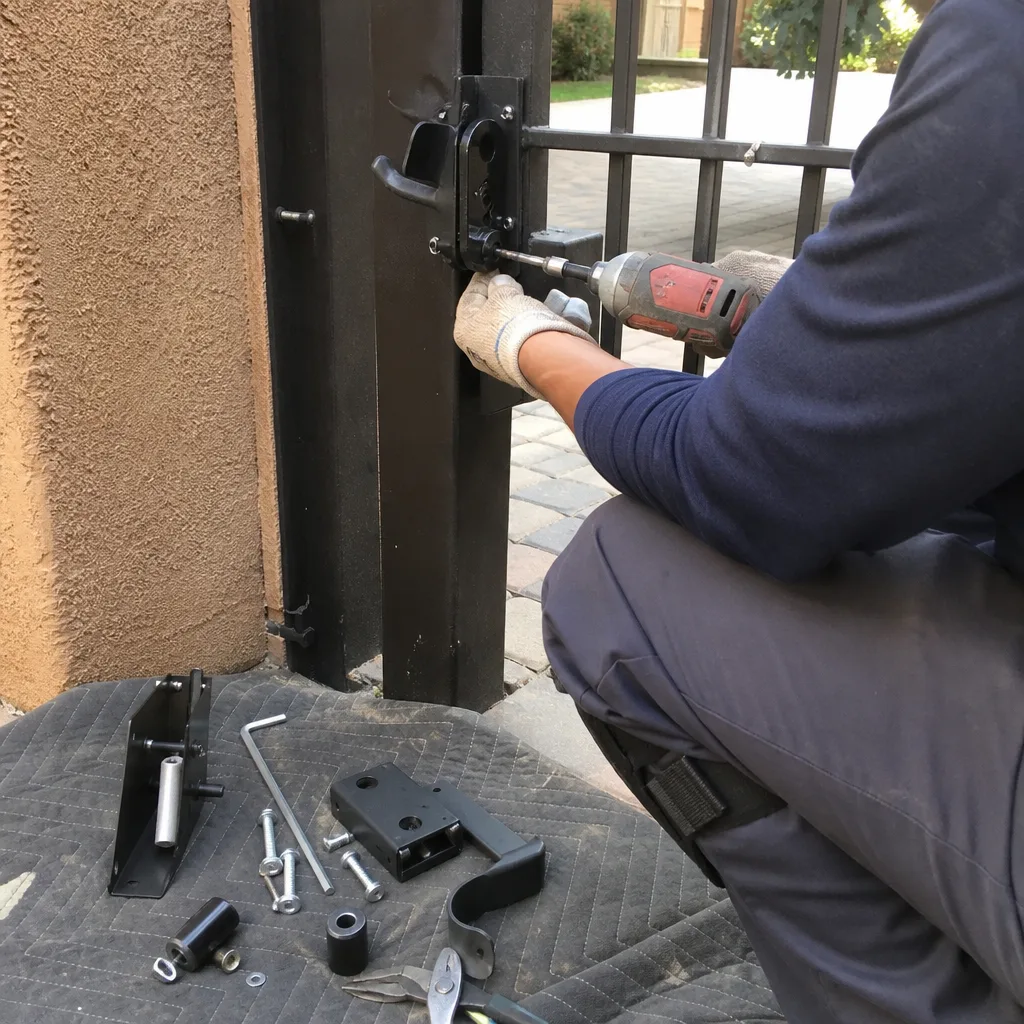
- Hinge lubrication and adjustment: Squeaking or binding swing gates usually need white lithium grease on the pin and a wrench to adjust the hinge plate. Check for cracked masonry at the post base - common in Scottsdale’s expansive clay soils.
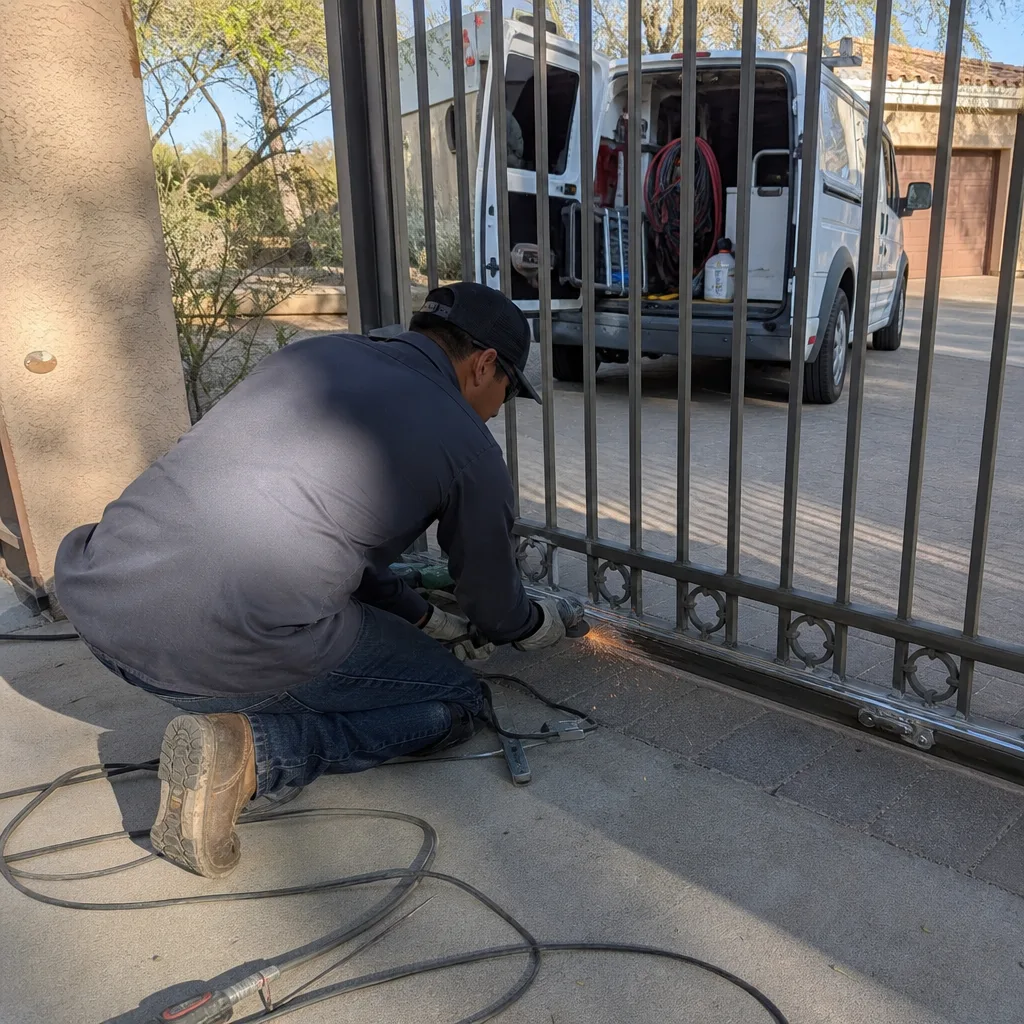
- Track clearing (slide gates): Gravel, Palo Verde debris, and pack-rat nesting material jam slide gate tracks regularly in North Scottsdale. A shop vacuum and wire brush restore travel.
- Remote battery and programming: Most gate motor and opener remotes use CR2032 batteries. Programming a new remote to a LiftMaster or Linear receiver takes 30 seconds with the learn button - check your manual for the specific sequence.
- Visual hardware inspection: Look for cracked welds at arm brackets, loose chain tension on slide gates, and worn rollers. Note what you find; even if you don’t repair it, the documentation saves diagnostic time.
- Manual release operation: Every automatic gate must have a manual release. Test yours quarterly. If it’s seized, penetrating oil and patience usually free it.
Electrical Repairs - Professional Territory
These involve line voltage, low-voltage control circuits, or safety systems. Arizona’s Residential Contractor statute (R4-9-102) and the National Electrical Code apply.
- Control board replacement: The board interprets sensor inputs and commands the motor. Incorrect wiring can destroy a $400 board in seconds. Scottsdale’s summer attic temperatures (140°F+) degrade solder joints; diagnosis requires understanding thermal failure patterns.
- Photo-eye alignment and wiring: The infrared beam that stops the gate if something crosses the path must sit at a specific height and angle per UL 325. Misalignment after a DIY attempt is the most common callback we see in Scottsdale.
- Loop detector installation: The inductive loop embedded in the driveway connects to a detector module. Incorrect sensitivity settings cause false triggers or failure to detect vehicles - a liability issue if the gate strikes a visitor’s car.
- Power run extension or modification: Any new 120V circuit to a gate motor requires a permit in most Maricopa County jurisdictions and must be performed by a licensed electrician or a residential contractor with the appropriate classification.
Structural Repairs - Professional Required
These affect the gate’s ability to stand, move, or stop safely.
- Post replacement or resetting: A leaning gate post in Scottsdale’s caliche soil requires excavation, proper drainage (critical in monsoon season), and often a concrete footing below the frost line - though frost is minimal, the code still specifies depth for wind load.
- Welding of gate frames or pickets: Structural welding on a moving gate affects balance and load distribution. Poor weld penetration creates a failure point under cyclic stress.
- Gate replacement or new installation: Gate installation in Scottsdale requires load calculations, footing design, and compliance with ASTM F2200 for safety. This is not a weekend project.
What Arizona’s ROC Statute Means for Gate Repairs
Arizona’s Registrar of Contractors divides work into classifications, and gate repair sits in a gray zone that surprises many homeowners. Here’s what the statute means in practice.
Unlicensed work you’re legally allowed to perform on your own home: Basic mechanical maintenance, battery replacement, and cosmetic touch-ups fall under the homeowner exemption (A.R.S. § 32-1121). You can do this work yourself without ROC involvement.
Work that triggers licensing requirements: Any electrical modification beyond like-for-like replacement of a plug-in component requires a licensed electrician or a residential contractor (R-11, CR-11, or equivalent) if the total project value exceeds $1,000 including labor and materials. Most gate motor replacements with power run adjustments exceed this threshold. More importantly, any work that affects the safety system’s compliance with UL 325 - the standard governing automatic gate safety - creates liability exposure if performed unlicensed.
The resale and incident consequences: We’ve been called to Scottsdale homes where a DIY gate repair became a problem at two critical moments. First, during a home sale, when the buyer’s inspector flagged unpermitted electrical work and the seller had to pay for professional correction under a compressed timeline. Second, after an incident - a gate striking a vehicle or person - when the homeowner’s insurance carrier denied coverage based on unlicensed modification of a safety system. The ROC classification matters because it determines whether your policy responds.
The practical rule: If the repair involves a wire nut, a conduit, or a safety sensor, check whether your homeowner’s policy requires licensed work for coverage. Most Scottsdale policies written through national carriers include this clause, though it’s rarely prominent.
The True Cost of a DIY Attempt Gone Wrong
Homeowners often compare the $80 control board on Amazon against our diagnostic and replacement fee. The comparison misses the full cost structure. Here’s what we’ve documented from call-backs in Scottsdale where a DIY attempt preceded our visit.
| Cost Component | Typical Range | Notes |
|---|---|---|
| Original DIY parts | $40-$180 | Often incorrect specification; non-returnable electrical components |
| Diagnostic time to undo attempt | $95-$150 | Tracing crossed wires, identifying burned traces, documenting prior work |
| Replacement of damaged components | $120-$600 | Control boards, transformers, or motors damaged by incorrect wiring |
| Professional repair (original scope) | $180-$450 | What the job would have cost without the DIY attempt |
| Total DIY-then-professional cost | $435-$1,380 | versus $180-$450 for professional-only |
The diagnostic time is the hidden cost. When we arrive at a Scottsdale gate and find wires stripped with diagonal pliers, a control board with reversed polarity damage, and no documentation of what was touched, we bill for the time to reconstruct the failure sequence. Under Vance Gate Repair Scottsdale‘s Haven Standard, we photograph everything and provide a written record - but we cannot waive the time spent undoing work that obscures the original fault.
There’s also the warranty issue. A professionally installed FAAC or BFT control board carries a manufacturer warranty that requires installation by a qualified technician. Owner installation voids that coverage. The $60 savings on a part becomes a $400 replacement when the board fails six months later.
Owner-Serviceable Repairs: A Step-by-Step Guide
For the mechanical repairs that genuinely belong on the homeowner side, here’s how to do them correctly and document them for the next technician.
1. Hinge Maintenance on a Swing Gate
- Close the gate and engage the manual release so the motor cannot activate.
- Inspect each hinge pin for rust, galling, or vertical play. Scottsdale’s dry climate reduces rust but dust accelerates wear.
- Apply white lithium grease to the pin and barrel. Avoid WD-40 - it evaporates and leaves a sticky residue that attracts dust.
- Cycle the gate manually through its full arc. It should move with steady resistance, not binding or free-fall.
- Photograph the hinge condition before and after. Note the date and any play you measured.
2. Track Clearing on a Slide Gate
- Disconnect power at the breaker - not the motor switch, the breaker - so the gate cannot be activated remotely.
- Remove debris with a shop vacuum and stiff brush. Palo Verde leaflets and flower petals compact into a gritty paste when wet.
- Check the track for vertical deflection. A level placed across the track should show no more than 1/8″ variation over 10 feet.
- Lubricate the chain or rack with manufacturer-specified grease. Most Viking and Linear slide gates use a lithium-based open-gear lubricant.
- Photograph the track condition, any wear patterns on the rollers, and the chain tension measurement.
3. Remote Programming
- Locate the learn button on the receiver - usually on the motor housing or a separate control box.
- Press and release the learn button; the LED will illuminate for 30 seconds.
- Press the desired button on the remote within that window.
- Test from multiple distances and angles. Note any dead zones.
- Record the remote model, date programmed, and any operational notes in your home maintenance log.
Repairs That Require a Professional
These repairs carry consequences beyond the immediate fix. We’ve categorized them by the specific risk they present.
Control board diagnostics and replacement. A gate motor’s control board receives inputs from multiple safety devices and outputs motor commands with precise timing. A board that fails intermittently - common in Scottsdale’s heat - requires oscilloscope or manufacturer-specific diagnostic tools to distinguish between board failure, sensor drift, and wiring degradation. Replacing a board without identifying the root cause often leads to repeat failure. We see this with FAAC 740 boards and LiftMaster LA500 logic modules, where thermal cycling in unshaded enclosures causes solder joint fractures that mimic component failure.
Safety system verification. UL 325 requires specific force limits and entrapment protection. A professional repair includes testing with a calibrated force gauge and documenting the readings. In Scottsdale, where gates often enclose pools or face pedestrian sidewalks, this documentation matters for liability.
Any work in a conduit with aluminum wiring. Pre-1985 Scottsdale homes frequently have aluminum branch circuits extended to gate motors. Aluminum oxidizes at connection points, creating resistance and heat. Proper repair requires antioxidant compound, compatible connectors, and torque-specified terminations. The fire risk from improper handling is real and documented.
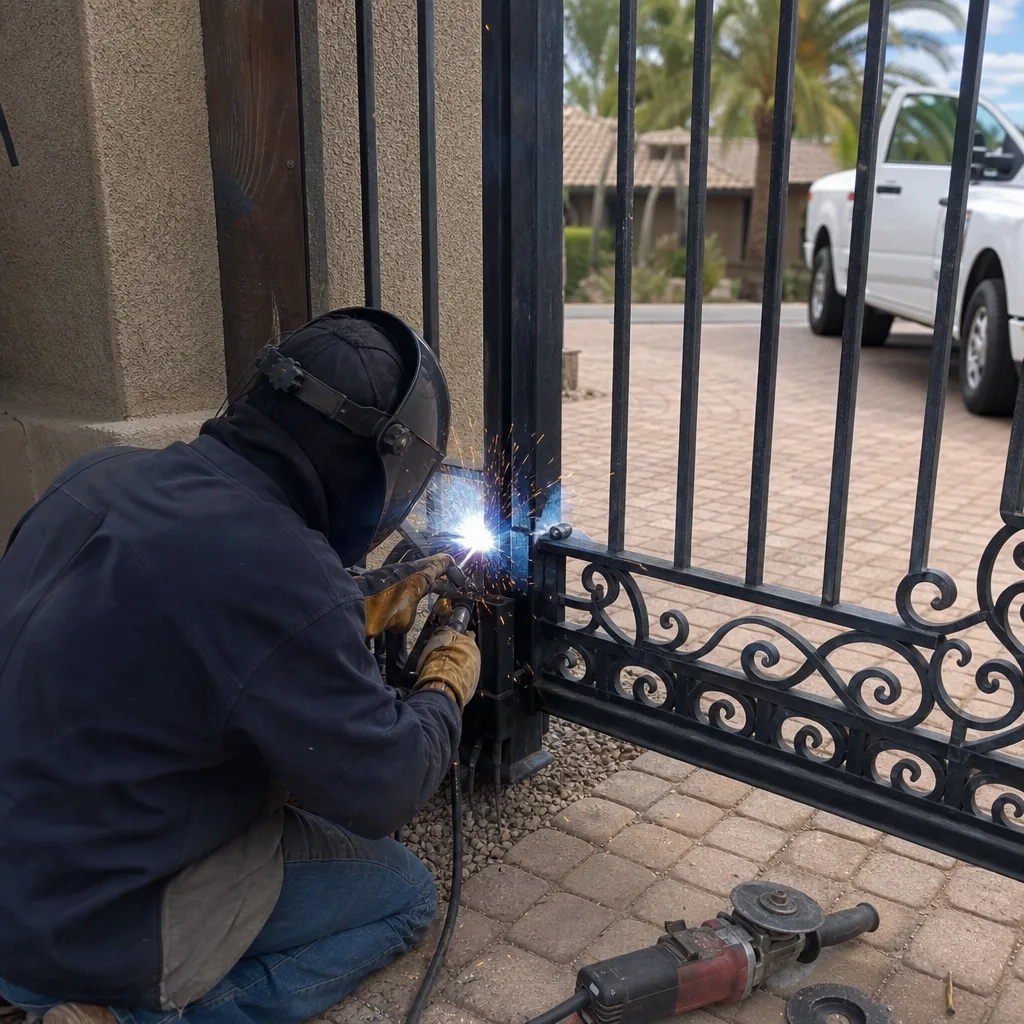
Welding on moving gates. Heat from welding warps thin-wall tubing. A gate that was balanced before welding may bind after, stressing the motor and creating a safety hazard. Professional welding on gates includes post-weld alignment verification.
Automation system integration. Modern gate motor and opener systems integrate with home automation, telephone entry, and access control. Programming these interfaces requires understanding of relay logic, communication protocols, and manufacturer-specific software. A Viking or DoorKing system with a broken RS-485 connection won’t reveal its fault without the right diagnostic cable.
How to Document a DIY Repair Properly
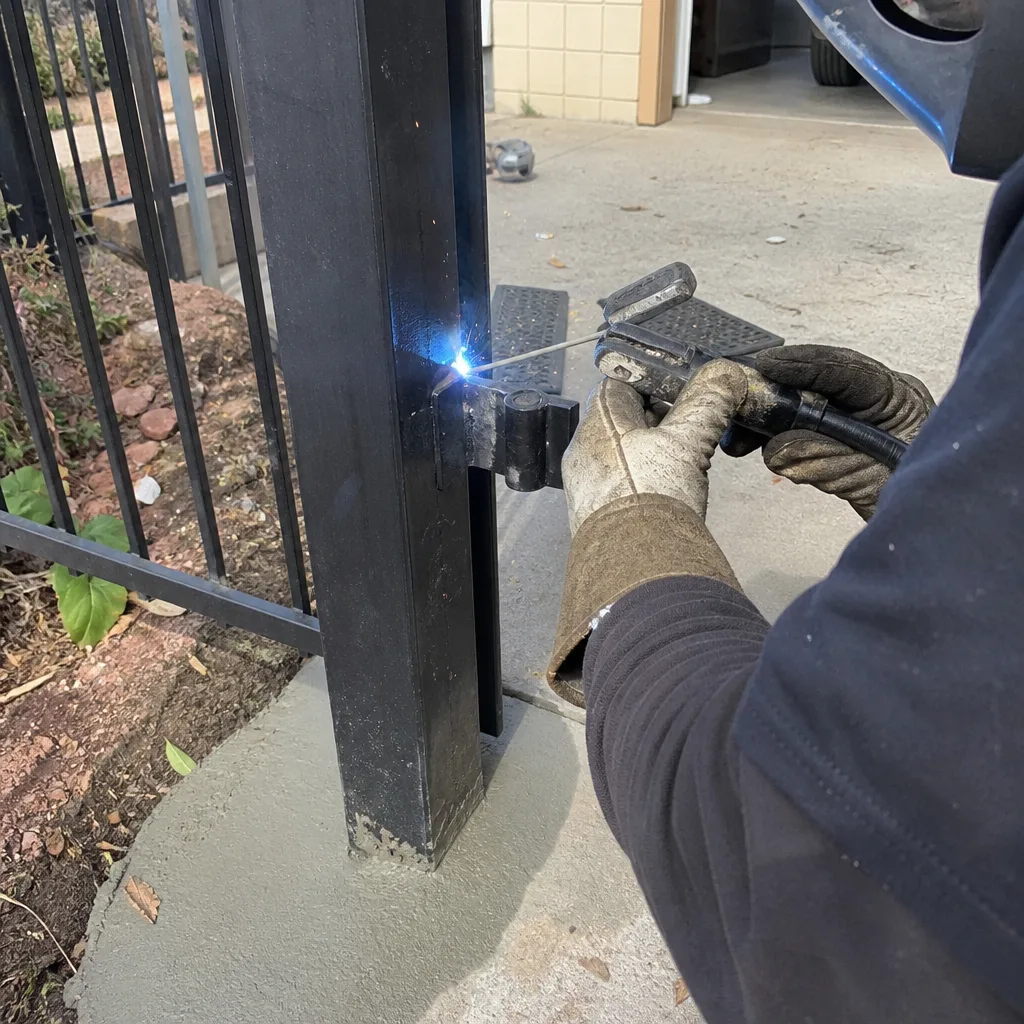
If you attempt any repair, mechanical or electrical, the documentation you leave behind determines whether the next technician charges for rediscovery or builds on your work. This is the photographic record habit we developed on commercial access-control sites starting in 2014, and it’s now standard on every gate repair in Scottsdale we perform.
The minimum photo sequence:
- Wide shot of the full gate and operator: Shows context, brand, and general condition.
- Close-up of the specific component before work: Captures part numbers, wire colors, and connection orientation.
- Detail of the problem: Crack, wear pattern, corrosion, or misalignment.
- During-work shot: Tool position, measurement, or adjustment point.
- After-work shot: Final configuration with part numbers visible.
- Test result documentation: Gate cycle video, force test reading, or remote range check.
The written log:
- Date and time of repair
- Weather conditions (temperature affects gate operation, especially in Scottsdale summers)
- Specific part numbers and sources
- Torque specifications or settings applied
- Any anomalies observed during testing
Store these with your home maintenance records. When you sell the property or call a technician for a subsequent issue, this documentation eliminates diagnostic time. Under the Haven Standard’s Clause 4 (Evidence on every job), we provide this same record on every professional visit - but we cannot create retroactive documentation for work we didn’t perform.
What a Professional Provides That YouTube Cannot
YouTube tutorials show ideal conditions: clean components, correct tools, and no complicating factors. A professional provides four things no video replicates.
1. Condition assessment beyond the symptom. A gate that opens slowly might have a failing motor, a dragging track, low voltage from a degraded underground cable, or a control board reducing speed due to force sensor drift. Distinguishing these requires systematic testing. In a 2023 Scottsdale call in Gainey Ranch, what presented as a motor failure was actually voltage drop from a partially severed direct-burial cable - a $2,400 motor replacement would have been unnecessary and ineffective.
2. Written scope and price before work starts. This is Haven Standard Clause 1. You know exactly what will be done and what it costs before anyone picks up a tool. No tutorial provides this accountability structure.
3. Tested and warranted work. Our 365-Day Done Right Promise covers all completed work for one full year. If the repair fails, we make it right at no additional charge. The parts we install carry manufacturer warranties that require professional installation. The labor warranty is ours alone.
4. Documented record for future reference. Every Vance Gate Repair visit leaves a photographed record of what was found, what was adjusted, what was replaced, and what was tested. If the same component fails again, we can determine whether it’s a defective part, an underlying condition, or an installation issue - without charging you to rediscover the baseline.
The commercial documentation habit Adrian Vance developed starting in 2014 means we treat every residential driveway gate with the same record-keeping rigor as a federal access-control installation. The homeowner receives the photo log and written record at no additional charge.
How Scottsdale’s Climate Affects Gate Components
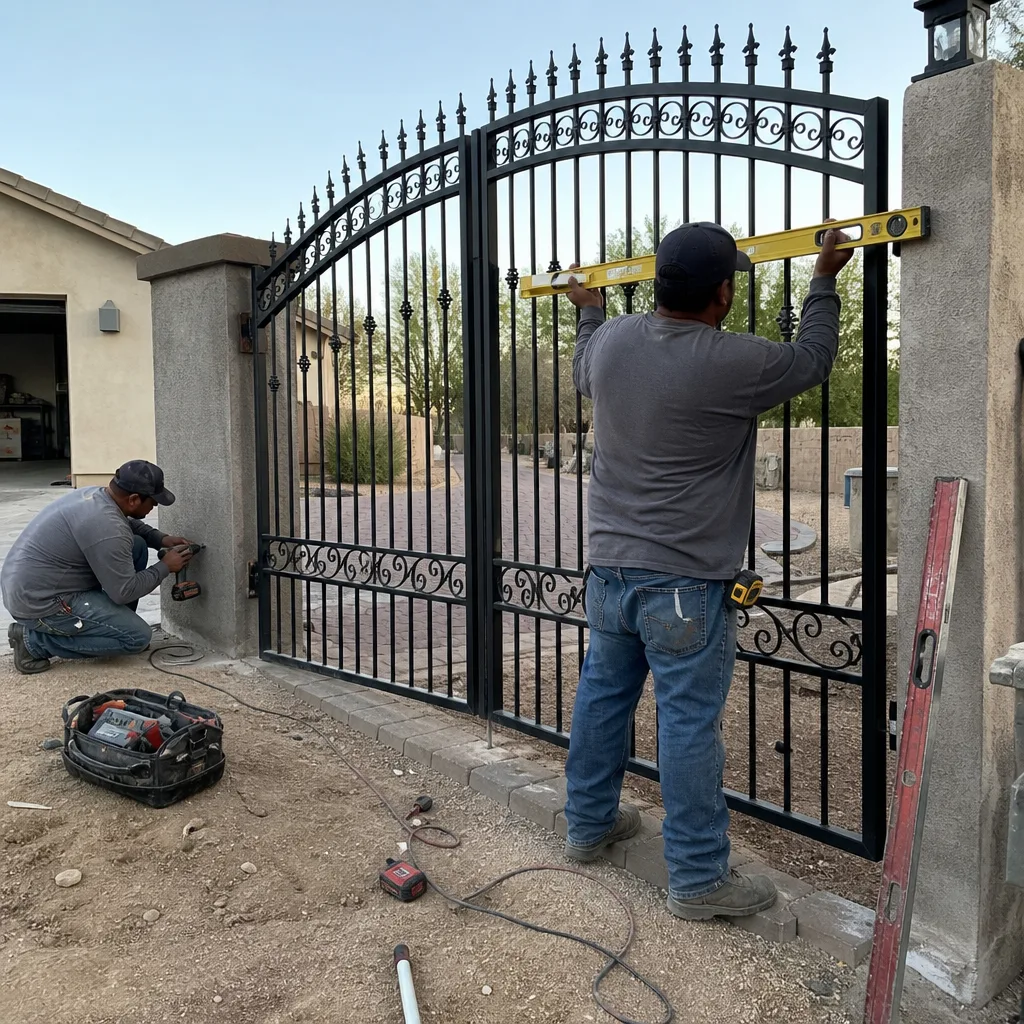
Scottsdale’s specific climate conditions create failure patterns that generic repair guides miss. Understanding these helps you decide whether a symptom is simple maintenance or professional territory.
Thermal cycling in unshaded enclosures. Gate motor housings in direct Scottsdale sun reach internal temperatures exceeding 150°F. Control board capacitors and relay coils degrade faster at these temperatures. A motor that functions perfectly in March may fail intermittently in July. Professional diagnosis includes thermal testing - running the gate through multiple cycles at peak temperature to reproduce the failure.
UV degradation of plastic components. Photo-eye housings, remote control cases, and wire insulation become brittle after 3-5 years of Arizona sun exposure. A DIY replacement with a generic part that lacks UV stabilization repeats the failure. We specify UV-resistant components for Scottsdale installations.
Dust and monsoon moisture. Scottsdale’s dry season deposits fine dust on circuit boards and in gearboxes. The first monsoon moisture converts this to conductive mud. Sealed enclosures and proper breather valve maintenance - a professional service item - prevent this.
Caliche soil and footing movement. The calcium carbonate hardpan beneath Scottsdale’s topsoil drains poorly and heaves with moisture changes. Gate posts settle, shift, and twist. A gate that scraped last summer may have a footing problem, not a hinge problem. Diagnosing this requires understanding local soil conditions.
Pack rat and snake intrusion. Desert wildlife seeks warmth in motor housings and control boxes. We’ve found pack rat nests in FAAC motor covers and snake skins wrapped around Linear limit switches. These intrusions damage wiring and create safety hazards. Professional service includes inspection and exclusion measures.
Common Mistakes to Avoid
- Using a standard multimeter on a live control board. The impedance of a digital multimeter can destroy sensitive gate logic components. Professional diagnosis uses isolated test equipment or manufacturer-specific diagnostic modes.
- Adjusting force limits to “fix” a binding gate. Increasing motor force to overcome mechanical resistance masks the underlying problem and creates an entrapment hazard. Scottsdale’s pool-safety culture makes this especially dangerous.
- Ignoring the manual release test. Every automatic gate must have a functional manual release for emergency egress. Testing it only when the power fails is too late. Test quarterly.
- Applying household lubricants to gate components. WD-40, 3-in-1 oil, and similar products attract dust and gum up in heat. Use manufacturer-specified lubricants only.
- Replacing a motor without checking voltage at the motor terminals. Low voltage from a degraded cable or undersized transformer destroys new motors. We measure under load, not at rest.
- Documenting nothing. The next technician - whether us or another company - charges for diagnostic time. Your photos and notes eliminate that cost.
- Assuming a YouTube video matches your installation. Gate automation brands have different programming sequences, safety configurations, and diagnostic procedures. A Viking video won’t help with your BFT installation.
When to Call a Professional
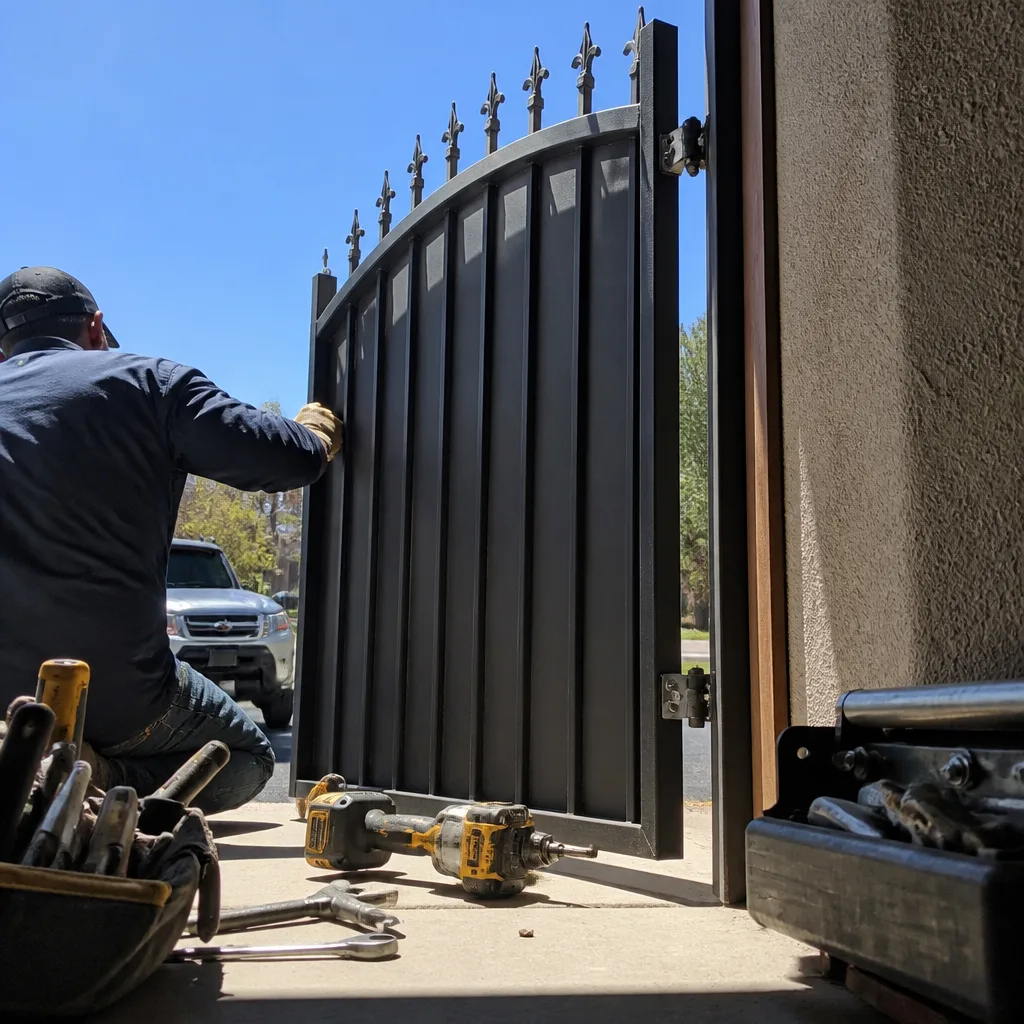
Call a licensed gate repair contractor when the problem involves electrical components, safety systems, structural elements, or any condition you cannot fully explain. Specifically: intermittent operation, unusual noises from the motor housing, gate movement that varies with temperature, any visible wire damage, or a gate that has struck a vehicle or person.
Vance Gate Repair Scottsdale offers free estimates in Scottsdale - call (928) 363-3921. A live person answers 24 hours a day, seven days a week. We’ll review your symptoms, ask the questions that narrow the scope, and provide a written price before any work starts. If you’ve already attempted a repair, bring your documentation; we’ll build on it rather than charge to replace it.
Frequently Asked Questions
Most residential gate repairs in Scottsdale range from $180 to $650, depending on whether the issue is mechanical adjustment, component replacement, or electrical diagnosis. Control board replacements for major brands like FAAC, BFT, or Linear typically run $340-$580 including parts and labor. We provide a written, itemized price before any work begins - no call-for-quote, no surprise invoice. Call (928) 363-3921 for an exact estimate; estimates are free.
You can physically install a motor, but manufacturer warranties require professional installation for coverage, and Arizona’s ROC statute may require a licensed contractor for the electrical connection. More importantly, motor replacement without diagnosing why the original failed often leads to repeat failure. Voltage drop, binding mechanics, or control board faults destroy new motors quickly. The apparent savings disappear when the replacement fails six months later and the warranty is void. For gate motor and opener work, professional installation with documentation protects your investment.
Arizona’s homeowner exemption allows unlicensed work on your own residence for basic mechanical maintenance, battery replacement, and cosmetic repairs. Electrical modifications, structural welding, and safety system adjustments that affect UL 325 compliance fall outside this exemption when project value exceeds $1,000 or when insurance policies require licensed work. For liability protection, any repair that could affect the gate’s safety function should involve a licensed contractor.
Thermal expansion and component degradation at high temperatures cause this pattern. Control board solder joints fracture under thermal cycling, motor windings increase resistance as insulation degrades, and grease thins in slide gate gearboxes. Scottsdale’s 115°F days push components beyond their design margins. Professional diagnosis includes thermal testing to identify the specific component and replace it with a heat-rated equivalent. This is not a maintenance issue; it’s a component failure requiring targeted repair.
Most Scottsdale homeowner policies exclude damage from unlicensed electrical work or modifications to safety systems. If a DIY repair causes fire, injury, or property damage, your carrier may deny the claim based on policy exclusions for work performed without proper licensing. Before attempting any electrical repair, verify your policy’s specific language. The documentation a professional provides - license number, permit record, and written scope - supports your coverage if an incident occurs.
Test monthly: place a solid object in the gate path during closing; the gate should reverse immediately. Check photo-eye alignment by interrupting the beam with your hand - the LED on the receiver should change state. Test the edge sensor (if installed) by pressing the contact strip. If any test fails, or if the gate reverses inconsistently, call for professional service. Safety system verification requires calibrated force testing that homeowners cannot perform with household tools. Call (928) 363-3921 for safety system testing; estimates are free.
The Bottom Line
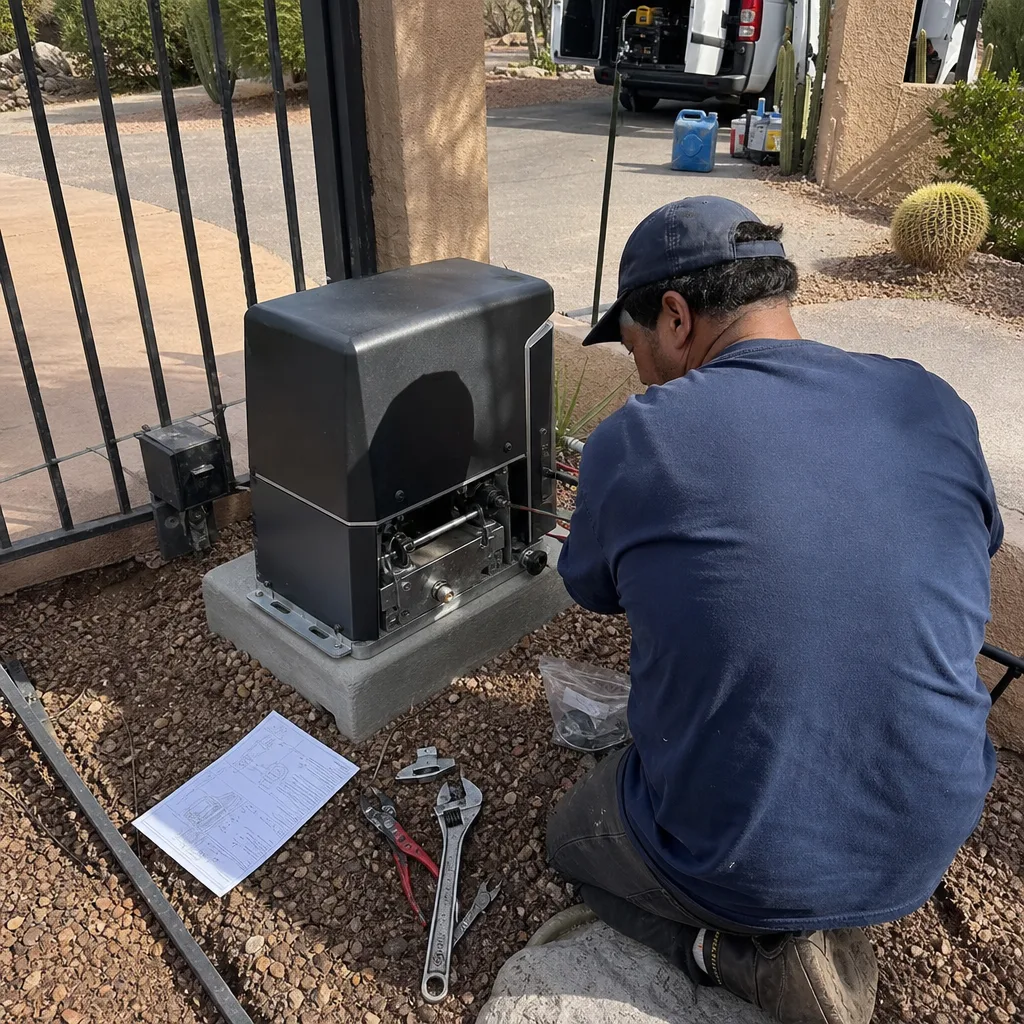
The DIY-versus-professional decision for Scottsdale gate repair follows the failure chain, not your confidence with tools. Mechanical maintenance - hinges, tracks, remotes - belongs to the homeowner with proper documentation. Electrical, structural, and safety-system work belongs to a licensed contractor with the tools, accountability, and documentation habit to protect you from fire risk, code violations, and insurance denial. The true cost comparison isn’t parts versus labor; it’s the cost of doing it right once versus the cost of doing it twice, with diagnostic time to undo the first attempt. For any repair you can’t fully explain, document, and warrant, professional service is the lower-risk choice.
Written by Adrian Vance, Owner at Vance Gate Repair Scottsdale, serving Scottsdale since 2014.